


There’s a question every good shop assistant asks at the till, and they ask it so nicely you’d never think of it as a sales technique.
“Is there anything else you need to go with that?”
I used to think it was manners. It isn’t, or it’s not only manners. It’s the business model. The coat gets you through the door. The boots, the bag and the little tin of leather balm are how the shop makes sales.
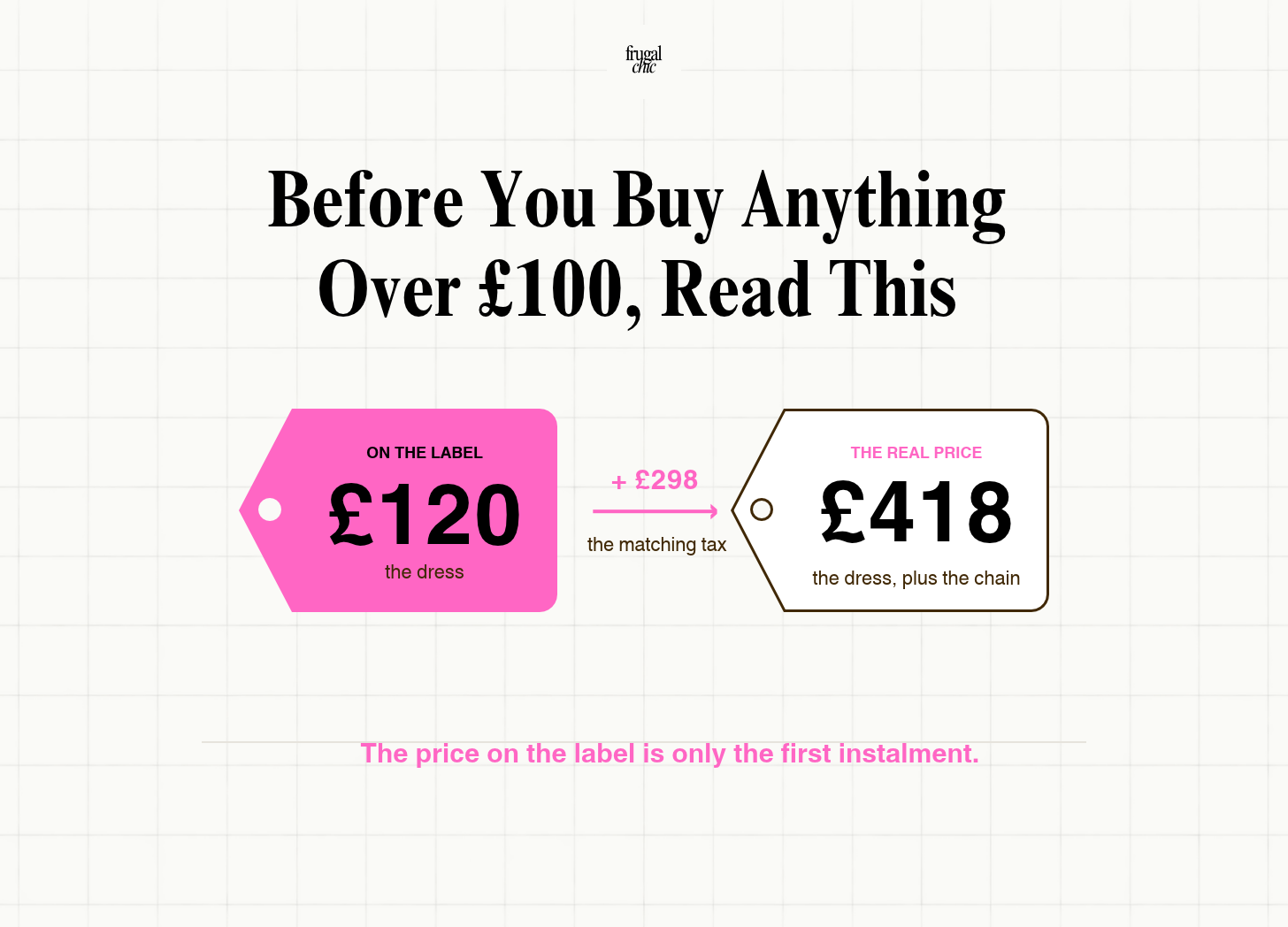
On Sunday I wrote about Diderot, his scarlet dressing gown, and the chain of upgrades one lovely thing can drag in behind it. If you read it and thought of your own chain straight away, you’re in very good company. The sofa that needed a new rug, the phone that needed a new everything, the wedding guest dress that had somehow cost £400 by the time it left the house.
None of those were bad decisions if you are looking at each one, individually. However, that in itself represents the whole problem. Every link in a chain is reasonable on its own. It’s only the total that isn’t, and nobody ever sees the total, because it arrives in instalments over six weeks and each one feels like an isolated event.
So today we do the sum before the first link. Five questions, one page, about two minutes in a changing room.
In this issue:
Why the price on the label is only the first instalment
Why £100, and why it has to work in a shop
The five questions, in full
The one-page sheet to keep on your phone
A party dress where the dress turns out to be the cheap part
The label is the first instalment
Retail has a phrase for this: the attach rate. It’s how many extras get sold alongside the main thing, and in plenty of shops somebody has a target for it. The case with the phone, the protector spray with the trainers, the “complete the look” row under every dress online.
The oldest version is the razor and the blades. Sell the handle cheaply and make the money on the blades for the next twenty years. Printers and ink. Coffee machines and pods. We all know that trick when it’s a gadget, and most of us have learned to check the price of the ink.
What we don’t notice is that our own taste runs exactly the same scheme on us, with no shop involved at all. Nobody sold Diderot the leather armchair. The dressing gown did.
So the price on the label is only ever the first instalment. The rest is what I’ve started calling the matching tax: everything that the new thing needs to work, plus everything it makes look wrong, plus whatever it costs to keep nice for a year.
It isn’t on the label, it isn’t on the receipt and it never appears in one place at one time, which is exactly why it never makes it into a budget.
