


Most people approach money from the wrong angle. They assume the problem is discipline. That they overspend because they lack willpower. So they respond with extremes: instant shopping bans, cutting out small pleasures, swearing off spending entirely. It works briefly, then backfires. They’re back to dipping into their savings account, promising themselves they’ll top it back up. Not because they’re weak, but because discipline was never the real issue. You need a purpose - a financial north star.
Frugal people aren’t frugal for the sake of it. There’s a difference that often gets missed. On one end of the spectrum, you have scarcity-driven frugality, the kind popularised by shows like Extreme Cheapskates. Fear-based decisions. Tap water at restaurants to avoid a bill. Instant ramen as a financial strategy. That version of frugality is restrictive, joyless, and unsustainable.
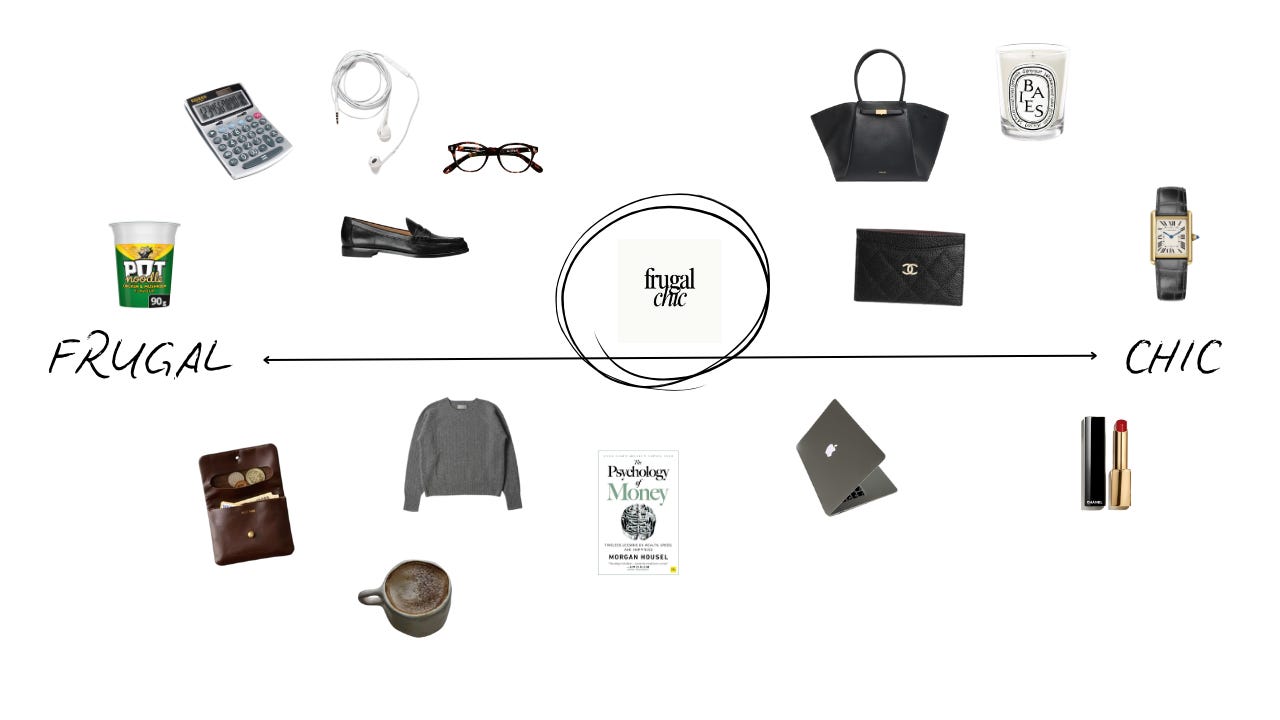
But there’s another kind. A quieter, more intentional version. One where people are perfectly willing to spend, but only on what genuinely matters to them. They’ll splurge selectively, unapologetically even, and cut ruthlessly elsewhere. Not because they’re afraid of money, but because they’re clear on what they’re building toward.

People often ask me why I live the way I do. Why I chose to work two jobs for an entire year, sacrificing free time so I could invest more aggressively. Why I’m conscious about spending instead of adopting a carefree, YOLO attitude, especially in my twenties. Why not just let go and enjoy it?
The answer is simple: every frugal person has a reason: a financial north star they’re working towards. No one sustains a lifestyle without a purpose behind it. I fall firmly into the intentional camp now, but I didn’t start there.
At university, my frugality was much tighter, and largely circumstantial. It was the first time I’d ever had to manage my own money, knowing it had to last. I did things that feel extreme in hindsight: washing clothes by hand, cooking every meal while my housemates ordered takeaway, and buying everything from charity shops. I wouldn’t live like that now, and I don’t romanticise it. But it taught me something important.
Resourcefulness teaches you a lot about what you truly need to be happy. When money is limited, you learn to ask better questions. Do I really need this? Is there another way? What actually adds value here? Those habits stayed with me long after my circumstances changed.
Now, I will happily spend £400 on a mid-range luxury bag, or a massage on holiday, or treating my family to a £500 meal because I have the means to, and these are the things I value. That being said, I will cut out unnecessary subscriptions, not buy unhealthy snacks or not spend much on alcohol because I don’t prioritise those things.
When you know what you’re building toward, impulse spending loses its power. A clear goal, buying a home, financial independence, control over your time, creates hierarchy. Decisions stop competing on the same level. A spontaneous purchase is no longer just “Can I afford this?” but “Does this move me closer to the life I want?”
For me, I want to buy a home in London, work for myself, and have the option to retire early. Although I love what I do, the optionality changes everything. Retiring in my 30s would mean reaching a £1m net worth by then, based on the 4% rule. Buying a home in London would require more than a £100k deposit on my income, and working for myself means I need to be even more conscious about how I spend time and money, as the stakes are higher when you’re self-employed. I would much rather have freedom of time and autonomy than the security of a regular pay-cheque, but the point is; that’s my own individual goal.
This is why defining your version of a rich life matters more than any budget. A rich life is not a universal template. For some, it’s flexibility. For others, it’s stability. For many, it’s time, autonomy, and the ability to say no. What it rarely is, is buying everything you’re told to want.
That’s where Frugal Chic comes in. Traditional frugality feels bland, lacking in style. It’s about frugality eventually leading to taste.
Taste is about clarity. Knowing what matters to you, and having the confidence to edit out the rest. The same way a well-curated wardrobe feels more powerful than an overflowing one, a well-directed financial life feels calmer than a high-income, high-stress one. Therefore, taste can be built by saying no.
Once you have a vision, discipline becomes automatic - it’s part of your identity to work towards the goals you set. You don’t rely on constant restraint because your choices align naturally. Spending less stops feeling like self-denial. Saving stops feeling abstract. Money becomes a tool in service of a life you’ve consciously chosen.
How to action this in your life starting today:
1. Define your financial north star in one sentence.
Not a vague goal like “be better with money.” Be specific. “Buy a home by 35.” “Reach £100k invested.” “Have full control over my time.” If a purchase doesn’t move you closer to that sentence, it’s optional.
2. Separate spending into ‘values’ and ‘defaults’.
List the things you genuinely value and are happy to spend on without guilt. Then list everything you spend on by habit, convenience, or social pressure. Cut ruthlessly from the second list, protect the first.
3. Replace willpower with structure.
Automate saving and investing so you’re not relying on discipline at the end of the month. Fewer decisions equals fewer mistakes. Frugal Chic is calm, not effortful.
4. Introduce a pause before impulse spending.
A 30-day wishlist (with dates of when you started wanting the item) brings clarity. Not to deprive yourself, but to see whether the desire survives time. Most impulses disappear when they’re not acted on immediately.
5. Practise saying no without justification.
To plans, purchases, subscriptions, trends that don’t align with your goals. Saying no is a skill, and like taste, it improves with repetition. It sounds cringe, but saying no to what doesn’t serve you is saying yes to yourself.
Frugal Chic isn’t about doing less for the sake of it. It’s about choosing deliberately. When you know where you’re going, your money stops feeling reactive and starts feeling purposeful. You don’t need extreme rules or constant self-control. You need clarity.
Build the vision first. Let taste guide your decisions and allow discipline to become a by-product of conscious choices.
That’s how money stops being a source of stress and starts supporting the life you want to live.
Mia
My forever wardrobe | Money resources
xx
P.S. do we like the more frequent letters? Would you prefer me to send any excess ones to web so they don’t clutter your inbox? I would like to stick to 1 free newsletter a week but I’ve got so much motivation to write atm. LMK - i check all messages.
The term financial North Star is genius. I love your content!
When I was saving for a deposit for my first flat in London that was in every decision I made. Every taxi, every takeout, every pint. I did it - but it took serious discipline! That pay rise? In the savings pot. That bonus? Same. The end goal was far sweeter than any new item of clothing could have been!