


New year, new you? We say it every year. But how many of us actually stick to the goals we set?
When YouGov asked people who’d made resolutions for 2025 how they got on, only 38% had kept all of them. I don’t think that’s a willpower problem. I think it’s because we wait until January 1st to suddenly become a financially responsible person, and that person doesn’t exist yet.
Prep is one of the best ways to make a habit stick. It’s less about willpower and more about identity: becoming someone who makes intentional decisions with her money, rather than relying on a January motivation burst.
So here are four things to start now.
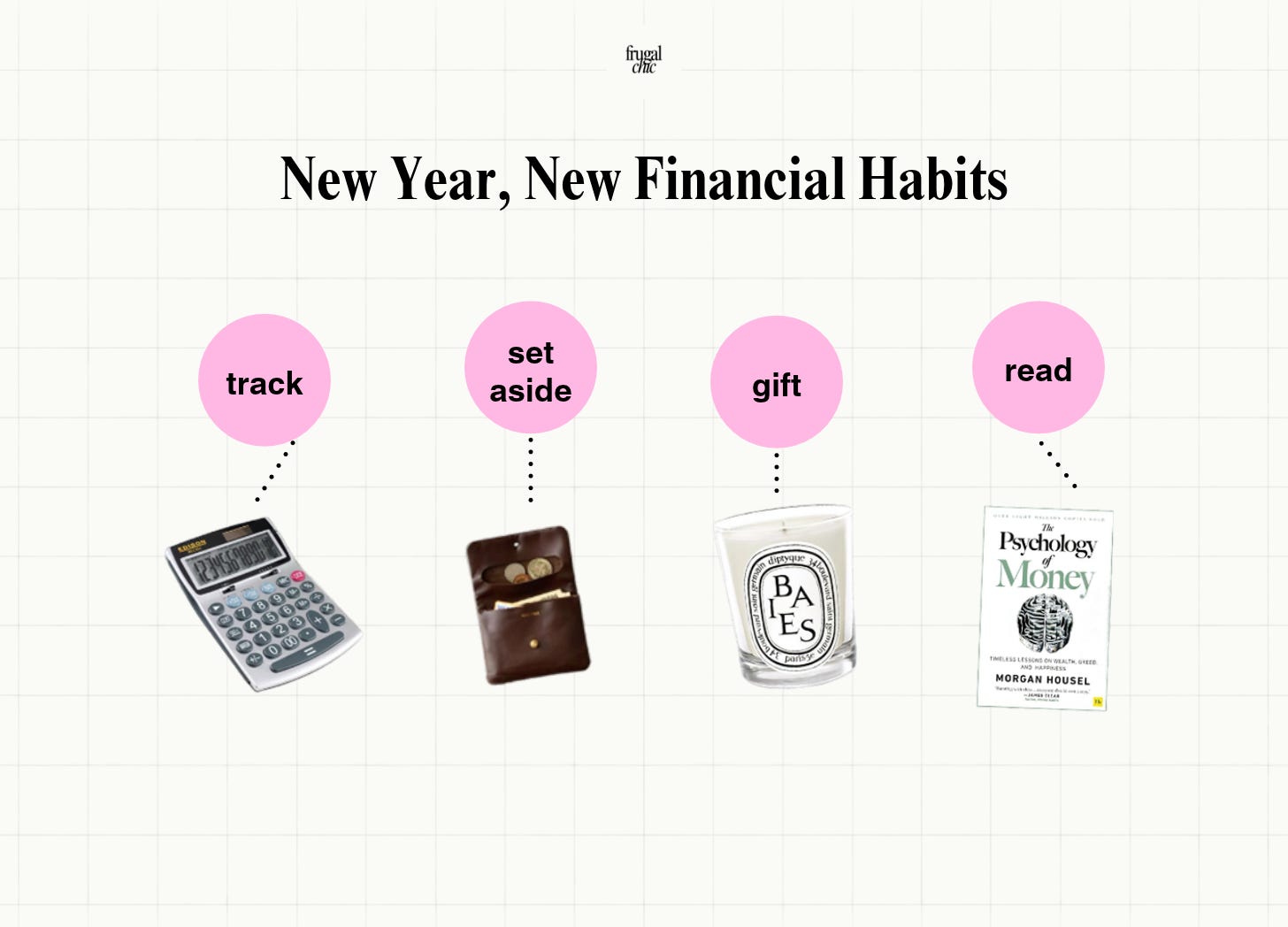
In this issue:
Why it’s worth opening your banking app before December, not after
What I set aside for Christmas every year, and why
Gifts that feel thoughtful without the price tag, including the one I’m splitting three ways
The money book to read before January
Why 66 days from today matters
1. Start tracking your expenses
Opening your banking app can feel daunting, especially coming into Christmas. Gifts, drinks, travelling home, Secret Santa, all the extra spending. But how can you make better decisions with your money if you don’t actually know where it’s going?
Look back at the last three months and sort it into rough categories. What are your biggest spends? What are the little purchases quietly adding up?
Then ask yourself two things. Where could I save? And where do I want to spend? Frugal Chic® was never about deprivation. Knowing which is which is what it’s about.
It doesn’t need to be a huge budgeting project. Your banking app’s spending insights, a notes page or a simple breakdown is plenty. Just get a baseline now, before December spending kicks in.
For me, the easy saving at this time of year is clothes. A lot of people feel they need a whole new autumn wardrobe, then end up pinching by the end of the month. So I’m rewearing a lot of what I brought out last year, like my 100% wool and cashmere turtlenecks from H&M, which come out year on year.
Party season is the same trap. In a YouGov survey for Oxfam, 29% of people who bought a new outfit for a festive party wore it once, and 7% never wore it at all.
Set some of your November pay aside for Christmas
December is expensive and we all know this. There’s the pressure to buy everyone a present, wanting to get something special for someone, and all the social plans on top of that.
I always have a Christmas sinking fund, and I put at least £700 into it every year, because that’s roughly what my Christmas costs. That’s close to average, too. The IPA’s 2026 Christmas research found we expect to spend £647 on average this Christmas, £84 more than in 2024.
So put some of November’s pay aside before December arrives, and decide what you’re happy spending before you’re in the shops. A set Christmas budget means you’re not spending as you go and hoping it all works out.
Because a lot of the time it doesn’t. One in five UK adults borrowed money to cover Christmas 2025, mostly on credit cards, and that’s where the dreadful January feeling comes from. Deciding earlier rather than reacting later is the whole idea.
And just because you’ve set a budget doesn’t mean you need to spend every penny of it, which brings me to gifts.
The Frugal Chic® rule: Decide what Christmas costs in November, so December doesn’t decide for you.
Gifts: less materialistic, more savvy
We often associate price with meaning, but more expensive doesn’t automatically mean more thoughtful. Researchers at Stanford found that people giving gifts assume a pricier present will be appreciated more, while the people receiving them don’t feel any more grateful for the expensive one.
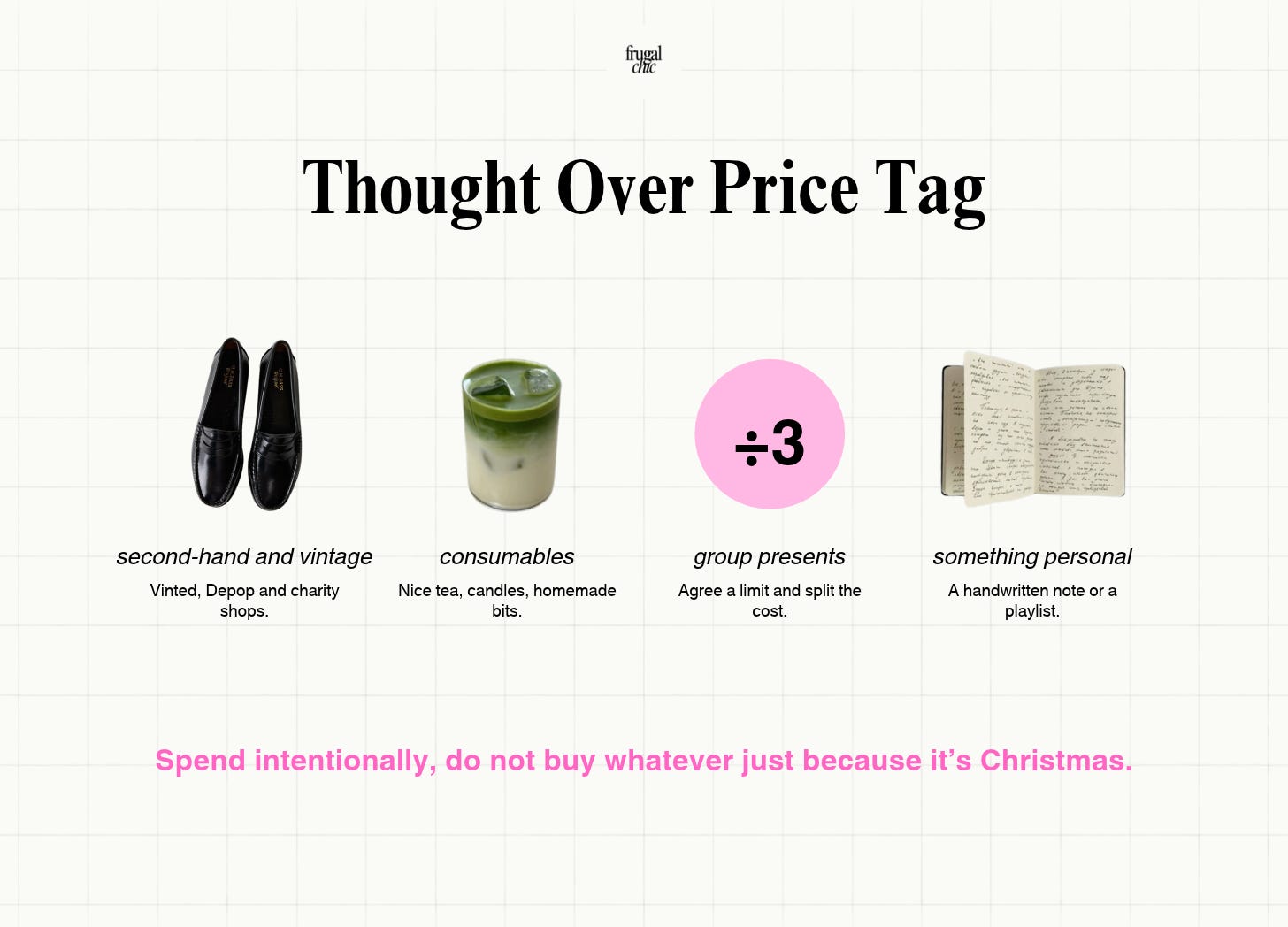
So start with the person. What would they actually like, use and appreciate? A few ways to make a gift more thoughtful without spending loads:
Second-hand and vintage. Vinted, Depop and charity shops. People are more open to this than we think: 55% of Brits would be pleased to get a second-hand Christmas present, but only 21% would buy one. We’re the nervous ones, not them.
Consumables. Nice tea, candles, homemade bits.
Group presents or a price limit. Agree one with friends so nobody feels pressured to overspend. My mum, my sister and I are chipping in for a Dyson V8 for my dad. It’s around £200 at John Lewis at the moment with £150 off, so I’m buying it while it’s discounted.
Something personal. A handwritten note or perhaps a playlist.
It’s less wasteful, too: gifts people will actually use, wrapped in paper or fabric rather than loads of plastic. Finder found 58% of UK adults have been given a Christmas present they didn’t like, so the thought really does beat the price tag. Spend intentionally, not just because it’s Christmas.
Read one money book before the end of the year
We spend so much time thinking about how to save money, but not much time understanding our relationship with it. The psychology behind spending, like impulse buying, lifestyle inflation and comparing yourself to others, is where most of our habits come from.

This matters most in your twenties. Research from the Current Account Switch Service found just 25% of 18 to 27-year-olds feel very confident managing their money, and only 21% would call themselves very financially literate, the lowest of any generation. Understanding money early can change the way you make decisions for years.
So read one money book before January, as a little investment in yourself.
And obviously, pre-order mine! Frugal Chic is out on January 12th, so it’ll have to be your first book of 2027.
Prep instead of striving for perfection
All of these are small ways to get ahead of January rather than waiting for a fresh start. You don’t need to do everything at once. Picking one thing and starting now is better than making five resolutions you forget about by February.
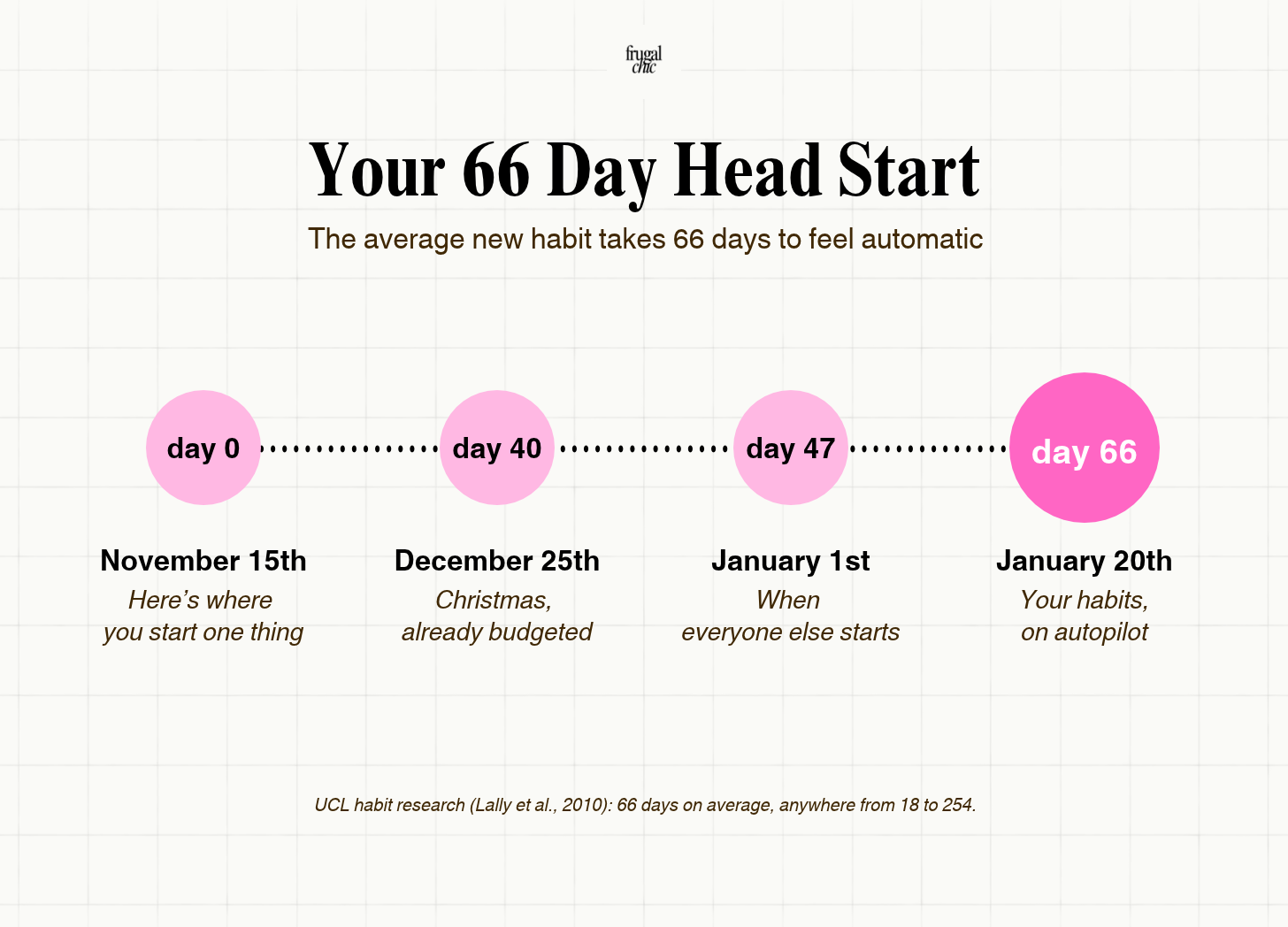
The timing works in your favour, too. In a UCL study, a new daily habit took 66 days on average to become automatic, although it ranged from 18 to 254 days, and missing the odd day made no real difference. 66 days from today is January 20th. That’s right when everyone else’s resolutions start to wobble, and yours could already be on autopilot.
The key takeaway here is: being financially savvy doesn’t mean never treating yourself or saying no to everything. It’s knowing what matters to you, where your money goes, and making it work for the life you want.
That’s all this week,
Mia xx
P.S. On Wednesday, paid subscribers get the Frugal Chic® gift guide: thoughtful presents by budget and by person, and the ones that feel expensive but aren’t. If you’ve been meaning to upgrade, this is a good week for it.
Sensible advice. A budget written in January is just the December statement talking. Getting the baseline in now is the actual hack.
"where do i want to spend" is the question i'd never asked properly. when i had ai sort everything i'd saved online this autumn, it found four nut milk makers in there, which said more about what i actually want than my banking app ever has.