


Ask someone how much money would be enough and you’ll get the same answer almost every time: “A bit more than I’ve got.”
Ask them again in a year, once they’ve got the bit more, and you’ll get the same answer.
I know, because I used to have a similar answer. On my old salary I had a number in my head, and every time I got close to it, it moved. Then I made over £100k profit in my first full year as a creator and the number stopped moving. For the first time I’d actually worked out what enough was, and it was a lot smaller than what I was earning.
If you read Wednesday’s Financial lock-in and worked out your Christmas number, this is the bigger version of that sum. But this is not just for December, it’s for your your life.
In this issue:
What the research actually says about money and happiness (three studies that disagree)
Golden handcuffs, lifestyle creep, and the time you’re really spending
Leverage: the three ways to earn without trading hours for it
The enough line, turned into a number
My enough number, my FIRE number and my Coast FI number, worked out line by line
The enough test for any upgrade
Where it goes wrong
Obviously, nothing in this post is financial advice. It's how I think about my own money and how I work out my own numbers, and it depends entirely on your circumstances.
Does money actually make you happy?
Depends who you ask, and what season of life each person is in.
In 2010, two Nobel prize winners, Daniel Kahneman and Angus Deaton, went through 450,000 survey responses and found that day-to-day happiness (how people said they’d actually felt the day before) rose with income up to about $75,000 a year, then stopped. Above that, more money didn’t make anyone feel better on an ordinary Tuesday. It did make them rate their lives more highly when asked, which is a different thing. That study became the version everyone knows: past a certain point, money stops mattering.1
In 2021, a researcher called Matthew Killingsworth pinged 33,000 working adults on their phones, 1.7 million times in total, and asked how they felt right then. Happiness kept rising with income. No plateau at $75,000, and none at $200,000 either. But, and this is the part everyone skips, it rose with each doubling of income. Going from £30,000 to £60,000 gave people about the same lift as going from £60,000 to £120,000. Every step up costs twice as much as the last one.2
So in 2023 the two sides did something academics almost never do and published a joint answer. Both had been right, for different people. For the unhappiest fifth, the plateau was real: money helped up to about $100,000 and then stopped, because whatever was making them unhappy wasn’t something money could fix. For everyone else, happiness kept climbing with income. For the happiest 30%, it climbed faster.3
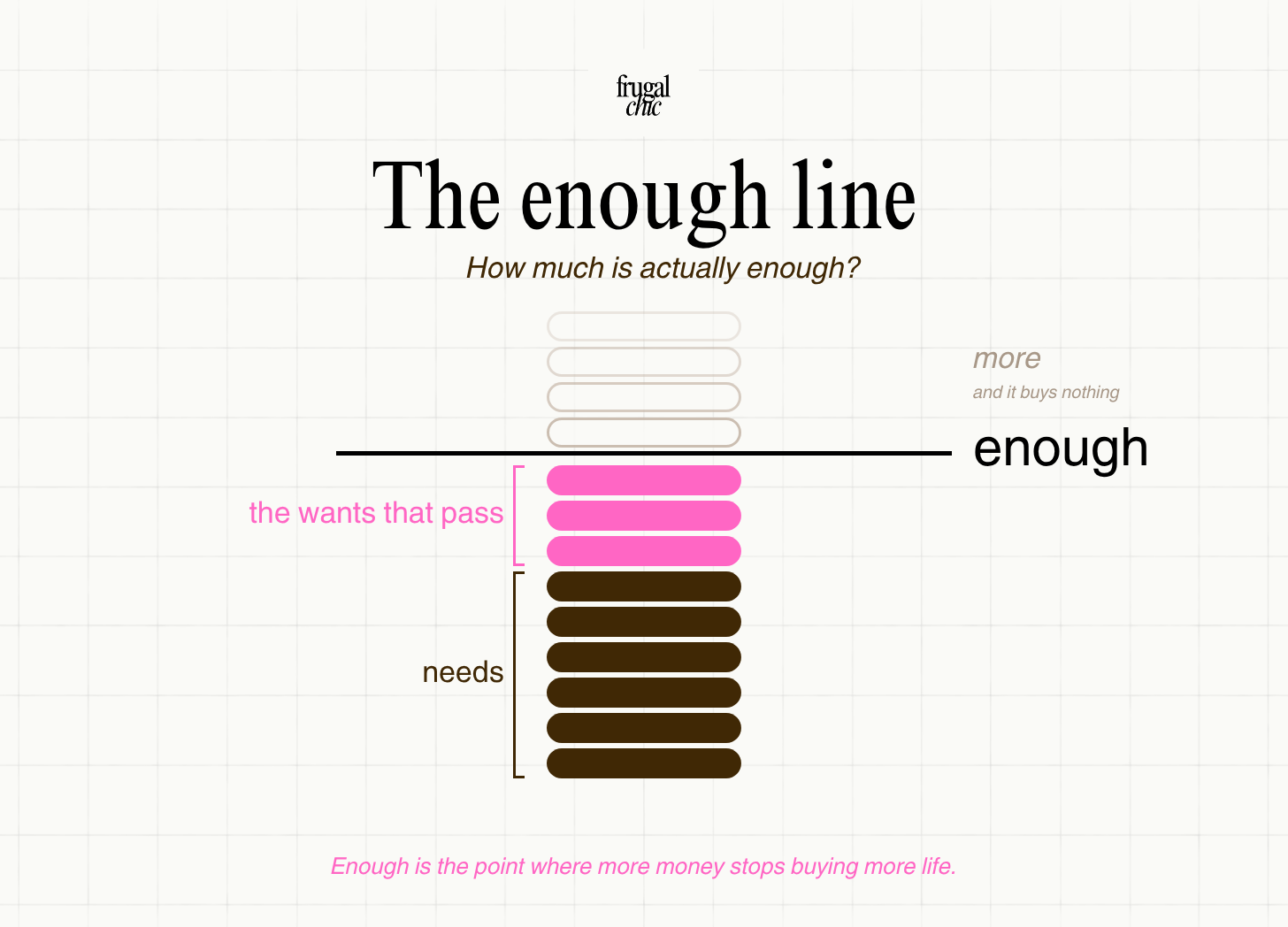
Here’s how I read all of that, having now lived on both sides of the first number. The first money changes everything: rent covered, no dread when a bill lands, a buffer in the account. The next money changes less, and each lift costs twice as much as the one before. And the money after that changes almost nothing unless you’ve decided what it’s for. Which is the bit almost nobody does.
When my income increased, I had the luxury to choose what I believed beneficial to splurge on, at what to save on. Some of the things I started doing have been things like getting more taxis especially for safety, I wouldn’t look at the bill when eating out because I’d made a conscious choice to splurge on that area. Also, I go to a luxury gym.
But there’s a lot that didn’t change: I didn’t upgrade my rent, I wear the same clothes, I didn’t buy anything designer but I do have a nice leather handbag already from Demellier.
Work actually allows me to live a more luxurious life because I sometimes go on work trips, meals and brand events. This actually means I feel less inclined to splurge on those things since my work is so intertwined with lifestyle. It obviously took me a while to get there.
Golden handcuffs you put on yourself
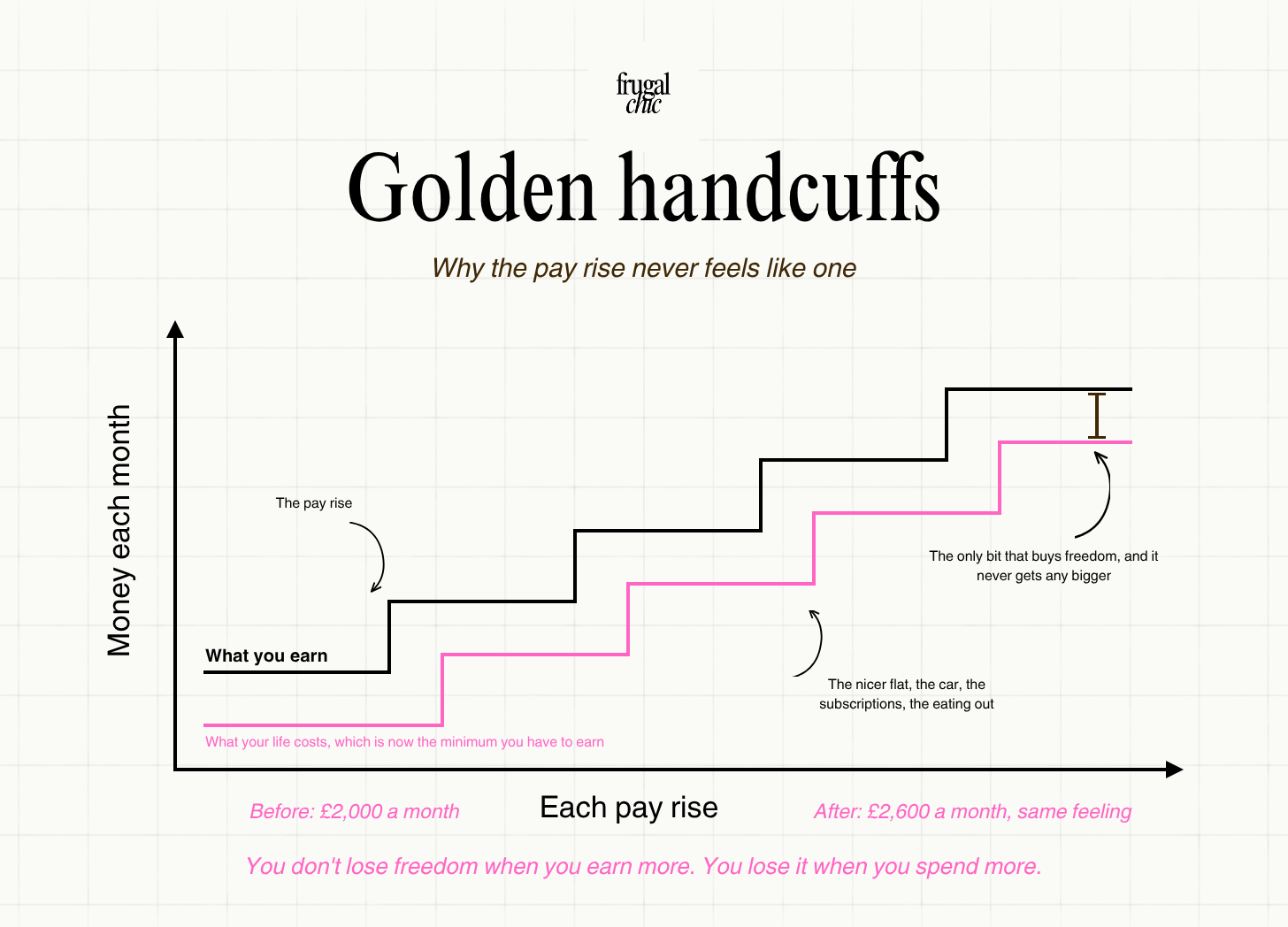
Lifestyle creep is what happens to the money in between. You go from £2,000 a month to £2,600 and the extra £600 doesn’t go anywhere you decided. It goes into a slightly nicer flat, a slightly nicer car, the Netflix subscription, a nicer gym membership, the eating out, until you’re earning 30% more and feel exactly the same as before.
Then comes the part nobody warns you about. Every one of those upgrades has to be paid for again next month, and the month after. So the job has to be kept, the hours have to be kept, and the pay rise you were so pleased about has quietly become the minimum you can now afford to earn.
That’s golden handcuffs. Most people think it’s something big companies do to you, but it isn’t. You lock them yourself, one upgrade at a time, trading more and more of your time to keep up with a life you might not even value.
The sum I want you to do:
Every £100 a month you add to your lifestyle is £1,200 a year you have to earn after tax. On a basic rate salary that’s roughly £1,700 before tax and National Insurance, more again if you’re still paying off a student loan. If you take home £3,000 a month, it’s about eight working days of your year, every year, for as long as you keep it. And if you ever want that £100 covered without working for it, you need about £30,000 invested to pay it. (more on that sum in a minute.)
Do that for the car finance, for the gym you don’t go to, for the flat that’s £300 more than the one you’d have been happy in. The more you spend, the more you have to earn, and the more of your time you have to trade for it. You don’t lose your freedom when you earn more, but you lose it when you spend more.
To be clear, this is not an article telling you to live on less. Some of my upgrades have been worth every penny. It’s an article about knowing what your life actually costs, so that the price is one you chose.
