


At 18, I had zero financial literacy, about to take on £51k worth of student loan and zero savings.
Now at 25 I have a £300k net worth, I run my own business and i’m working towards financial freedom.
In that time lots of factors came into play:
living at home for 2 years
living below my means
always having a side hustle
posting online and striking gold with timing and my niche
investing and returns from the stock market
But the factor I don’t talk about enough is exposure.
You can’t act on what you’ve never heard of.
Growing up, money wasn’t a taboo topic, but it wasn’t something discussed in detail either. Financial literacy isn’t really taught in schools, particularly as I went to a state school too. Investing, compound interest, mortgages, you’re sort of expected to know these things, yet there’s no obvious place to learn about them.
When I get asked on podcasts what got me into investing, I say it’s because I had male friends at university who spoke about it as if it were commonplace, the same way they spoke about sports or beer. In terms of saving, I had a friend in sixth form who told me she saved 50% of all her earnings. I took that as gospel and did the same, albeit lacking the experience to know that it doesn’t always work like that.
The point is, I have consumed hours upon hours of content about financial literacy, yet all these experiences came from people in real life, conversations, asking questions, not from a screen. They were the starting board which sparked my interest, it gave me the awareness.
Becoming financially literate doesn’t mean reading an economics textbook from front to back. It’s more about what feels normal to you, what gets spoken about openly, and what you learn to see as possible.
In this issue:
Why financial literacy isn’t built from consumption alone
The real advantage most people overlook: proximity to better conversations
How your environment quietly sets your financial ceiling
The difference in how wealthy people talk about money (and why it matters)
Why financial literacy isn’t built from consumption alone
We often think that financial literacy will just “come to us” once we’ve read enough money books or listened to enough podcasts. That somehow, by osmosis, we’ll absorb the information.
And to an extent, that’s true. I learnt most of what I know about ISAs, pensions, and investing from binge-watching YouTube videos and reading money books when I should have been entering data during my first remote internship during COVID.
But a lot of what I know didn’t come from consuming content.
It came from conversations.
A friend in sixth form once told me she saved 50% of every paycheck. In hindsight, that is not realistic for most adults in the real world, but for a teenager living at home and working in a gift shop, it was incredibly disciplined. More importantly, it made saving that much feel normal to me. So I carried that mindset into my first proper job.
At university, I had male friends who would casually show me their investment portfolios. One was buying individual stocks, the other was invested in ETFs. I remember feeling like I’d been let into some private club. Not excluded exactly, just aware that this was a conversation I had not grown up around. That exposure made me curious enough to start researching investing for myself.
Later, I found out a friend was earning £2,000 more than me despite having two years less experience. That conversation was uncomfortable, but useful. It made me realise I was underestimating my own value, and it directly pushed me to negotiate, which later led to a £10,000 pay rise.
I also remember an ex-boyfriend in sixth form telling me he was saving for a house deposit. I genuinely did not even know what that really meant at the time. But hearing someone my age speak about money in that way planted a seed. It made me think, maybe this is something I should care about too.
That is what I think people miss when they talk about financial literacy.
It’s those in-person moments that no video can really replace, it has a more personal meaning and I think forces us to take more action than just saving a video. I think how differently my life would feel if I never had the courage to ask those questions - even if they felt slightly uncomfortable at the time.
Now, as my life has changed quite dramatically over the past year, going from earning £30k in a junior role in fashion to becoming a full-time creator who can make 5-figure months, something I am surprised about is that the conversations I’m part of, and the rooms I’m in, have completely shifted again.
And it makes me wonder: if I had just been more curious, more proactive, could I have accessed these conversations sooner?
How your environment quietly sets your financial ceiling
Most of us are operating under an invisible ceiling. A quiet limit on what we think is possible for our lives. If no one around you is investing, you don’t think to ask about investing. If no one is earning beyond a certain level, that becomes your reference point. If no one is building anything of their own, full-time employment feels like the only option. If you don’t know where to look or you don’t have the exposure, it’s difficult to find these touchpoints.
Whether we want to admit or not, there is a difference in the way that rich people talk about money, even how men talk about money. They speak so openly about what they are doing with their investments. I love how Emma Grede articulated this here.
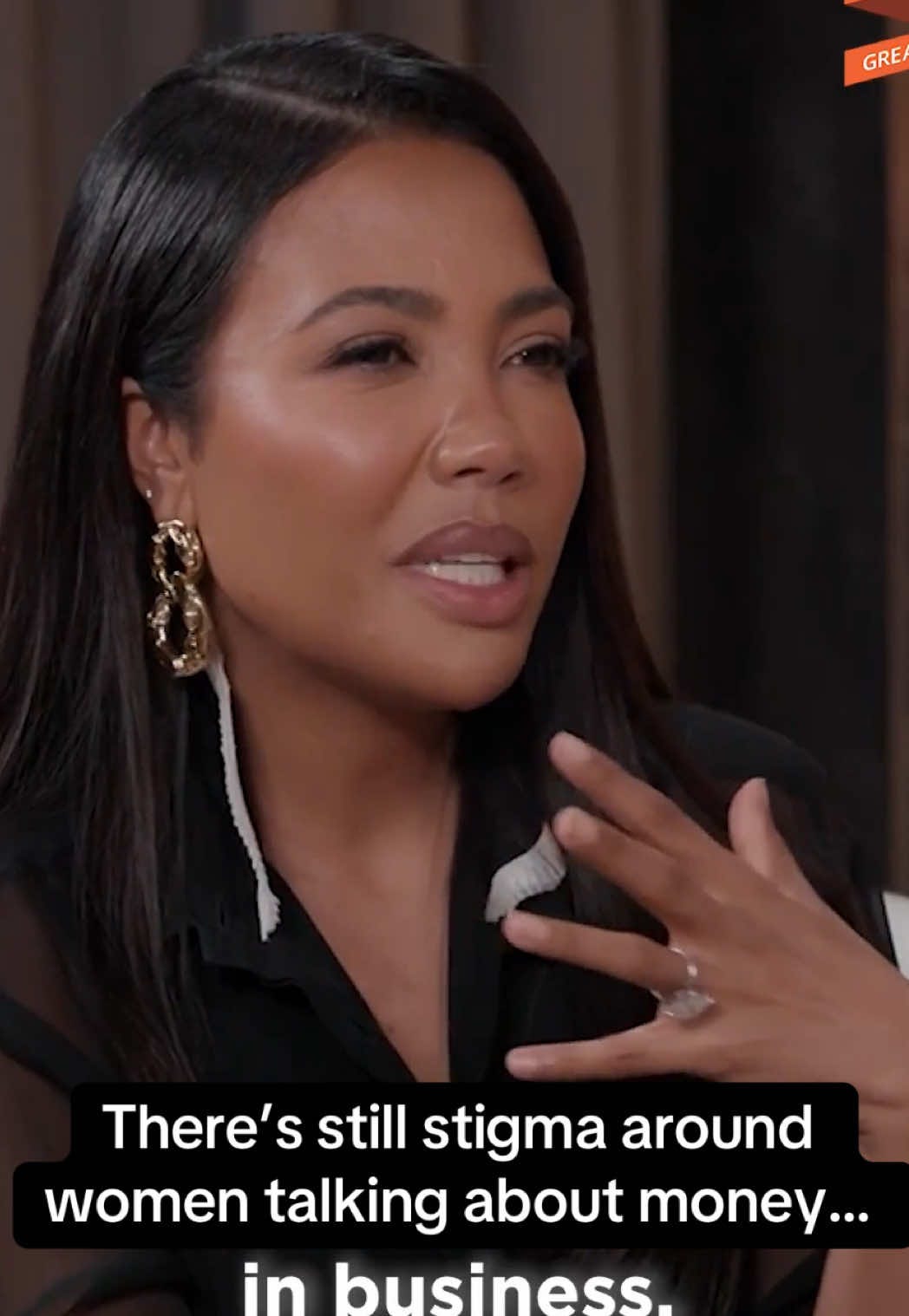
My personal feeling is we ought to proactively seek these conversations out, particularly if like me, financial literacy wasn’t discussed growing up. Recently we spoke about being low vs high agency and I feel that applies here, there is only so much we can blame school for not teaching us - at some point we need to be curious and seek these discussions ourselves.
How the rich talk about money
I remember a viral piece of content from a few years ago: “conversations my poor vs rich friends have”. It compared how the poor friends spoke about celebrity gossip and shopping and the rich friends spoke about business and money. I am personally not a fan of using that terminology so consider this to be a more grounded version of the same idea.
When I read Rich Dad Poor Dad, I finally understood the distinction it was trying to make. It was not really about one person being good and the other bad, or one deserving respect and the other not. It was about the way different people are taught to think about money. One mindset sees money as something that comes in and goes out, mainly to cover bills and fund consumption. The other sees money as something to direct, grow, and use strategically. For all its flaws, that was the part that stayed with me. It made me realise that wealth is not just about earning more, but about learning to ask better questions. How do I make this money last? How do I make it grow? How do I buy back my time? How do I build assets, not just fund a lifestyle?
It’s not about ditching your friends, becoming some kind of social climber or not being authentic to your true interests. I still have the same core set of friends I’ve always had. However, I do think more of us need to be going outside of our comfort zone in regards to the discussions we have about money.
What has changed for me is proximity. I can now find myself at a dinner with the founder of a multi-million-pound business, sitting next to the Chief of AI at a major tech company. And yes, a lot of that access has come through building a personal brand. But when I think about it properly, this shift started much earlier, and in much smaller ways.
At university, when my male friends were discussing stocks, I didn’t tell myself it was too advanced for me or sit there pretending I understood. I asked questions. I paid attention. I tried to take in as much as I could. It was the same whenever I came across someone in an entirely different world to mine, like a middle-aged man working in property. Rather than switching off and assuming we had nothing in common, I started seeing those moments differently. I use that as a chance to get a 1:1 with an expert in a field I knew nothing about.
Since adopting this forward approach to speaking about money, i’m now part of conversations where the talking point might be:
Things like:
“How are your investments doing right now?”
“Have you thought about hiring?”
“What do you outsource? I’m thinking of getting a cleaner.”
“How have you structured your holding company”
There is such a huge shift. Yes, part of that reflects where I am financially now. But that is not really the point. The point is that these are still just conversations. Conversations I probably could have been having sooner if I had been a bit more curious, a bit less intimidated, and a bit more willing to ask. Maybe it was never just about how much I knew about money. Maybe it was also about the confidence that comes from hearing these discussions regularly enough for them to feel normal.
A small part of why people feel like wealth is “gatekept” isn’t because people are hiding information. It’s because these topics don’t naturally enter your awareness unless you’re exposed to them.
So here is what I would focus on today if I wanted more exposure to these kinds of conversations:
Be curious - go on more side quests, talk to people outside of your comfort zone (e.g. you might be scared to speak to the trust fund kid with super financially literate parents, but it’s likely you’ll learn a lot from them), have a willingness to learn from anyone. Something I will stress is never to put anyone on a pedestal, this often prevents you from asking things openly.
Always ask - the worst someone can say is no. This applies to talking openly to friends, partners, parents about money. Speaking openly about salaries, side hustles, investing. The more secretive we are, the more this benefits those who hold the power.
Introduce one “money question” per week - Casually ask things like “are you investing?” or “what are you doing with your savings right now?” It doesn’t need to be deep, it just eases that tension we feel from never discussing these things.
Put yourself in proximity - Don’t just follow people online. Go to events, join communities, reply to newsletters, DM people whose work you respect.
Start seeing yourself as a saver, an investor, a financially literate person. Quite often when we have been following the narrative that we are ‘bad with money’, we don’t give ourselves permission to have a newer, more helpful identity.
We often think luck and opportunities live in isolation, but they come through people.
Financial literacy is not just built by consuming more information. It is built in the day-to-day, in the moments where you hear how someone else is thinking, saving, investing, negotiating, building. That is often the thing that expands your world because seeing it in practice is far more tangible.
Because sometimes the fastest way to change your financial life is not to consume more, but to get closer to the kinds of conversations that make a different life feel normal.
That’s it this week,
Mia
xx
This newsletter is kindly sponsored by XTB who are offering 6% on a Cash ISA currently for the first 90 days after opening.
I really love this take. The environment you are in create the 85% of you. If you are in an academic environment you are more likely to be educated and so on. Aldo John Rohan said that you are the product of the 5 people closer to you. Thank you for sharing
This is brilliant - I sometimes wonder how much of our planning and learning matters vs the people we surround ourselves with. I just wrote about how we can think of ourselves as these money archetypes and it would be so interesting to research whether people make more progress working with their same types or with a diversity of these. Curious what you think! https://dearmoneyletters.substack.com/p/which-of-the-3-money-archetypes-are?r=5lj7up&utm_medium=ios