


I’m frugal about a lot of things but my pillow isn’t one of them.
I rewear the same cashmere turtlenecks every winter and my Christmas money is set aside before December even starts. But I’ll also get an Uber and answer emails in the back, and I’ll happily pay more for a gym I actually go to.
People assume frugal means buying the cheapest version of everything. For me it means knowing exactly where the money is worth it.
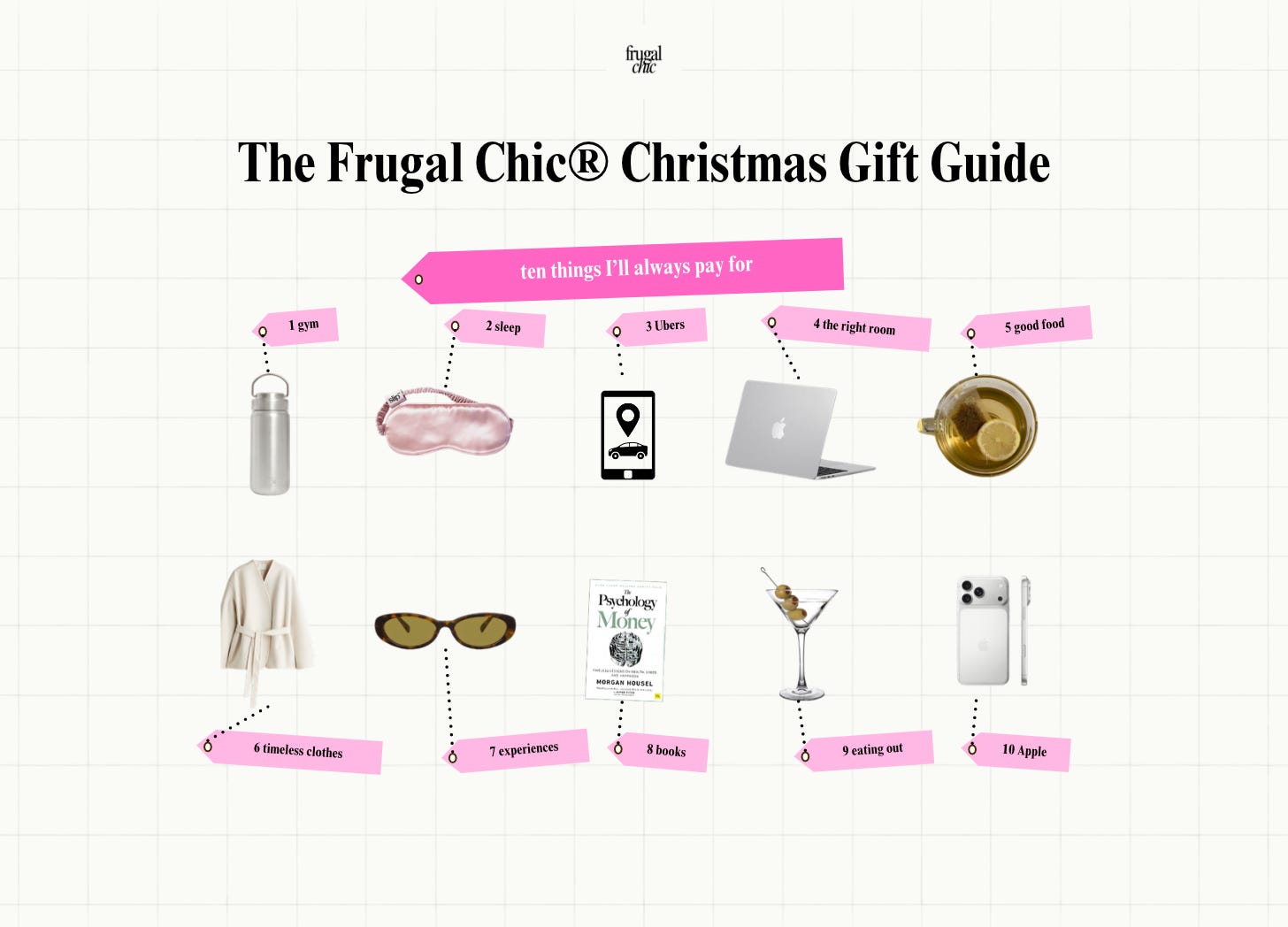
I made a video about the ten things I think are genuinely worth paying for, and when I looked at that list again, I realised it’s also the best gift list I could give you. The things worth buying for yourself are usually the things worth buying for the people you love.
On Sunday I wrote about thought over price tag. Today I thought I’d share the practical part: all ten, with a version for every budget.
In this issue:
The three things every good present does
The ten things I’ll always pay for, and how to gift each one at three budgets
Who each one is best for
What’s worth buying second-hand, and what isn’t
The presents that feel expensive but aren’t
Three questions to ask before anything goes in the basket
Why most presents end up in a drawer
We buy presents in a panic. It’s December 20th, we’re in a shop we wouldn’t normally go into, and we grab something that looks like a present. A novelty mug or a gift set in a box twice the size of what’s inside it.
Look at my list and you’ll notice almost none of it is stuff. Every item does one of three things: it buys back time, it makes an ordinary day better, or it makes a memory. That’s the whole filter, and it works whatever you’re spending.
There’s research behind the third one, too. Across four studies, Cindy Chan and Cassie Mogilner found that experience gifts made people feel closer to whoever gave them than material gifts did, even when the giver wasn’t there to share it.
The Frugal Chic® rule: If a present doesn’t buy back time, make an ordinary day better or make a memory, it’s clutter with a bow on it.
