


In January I gave myself a rule: I will only buy 12 items in 2026. One item per month if I wanted it, and only ever the thing I’d researched, waited for and actually valued.
It’s September and so far I’ve bought six.
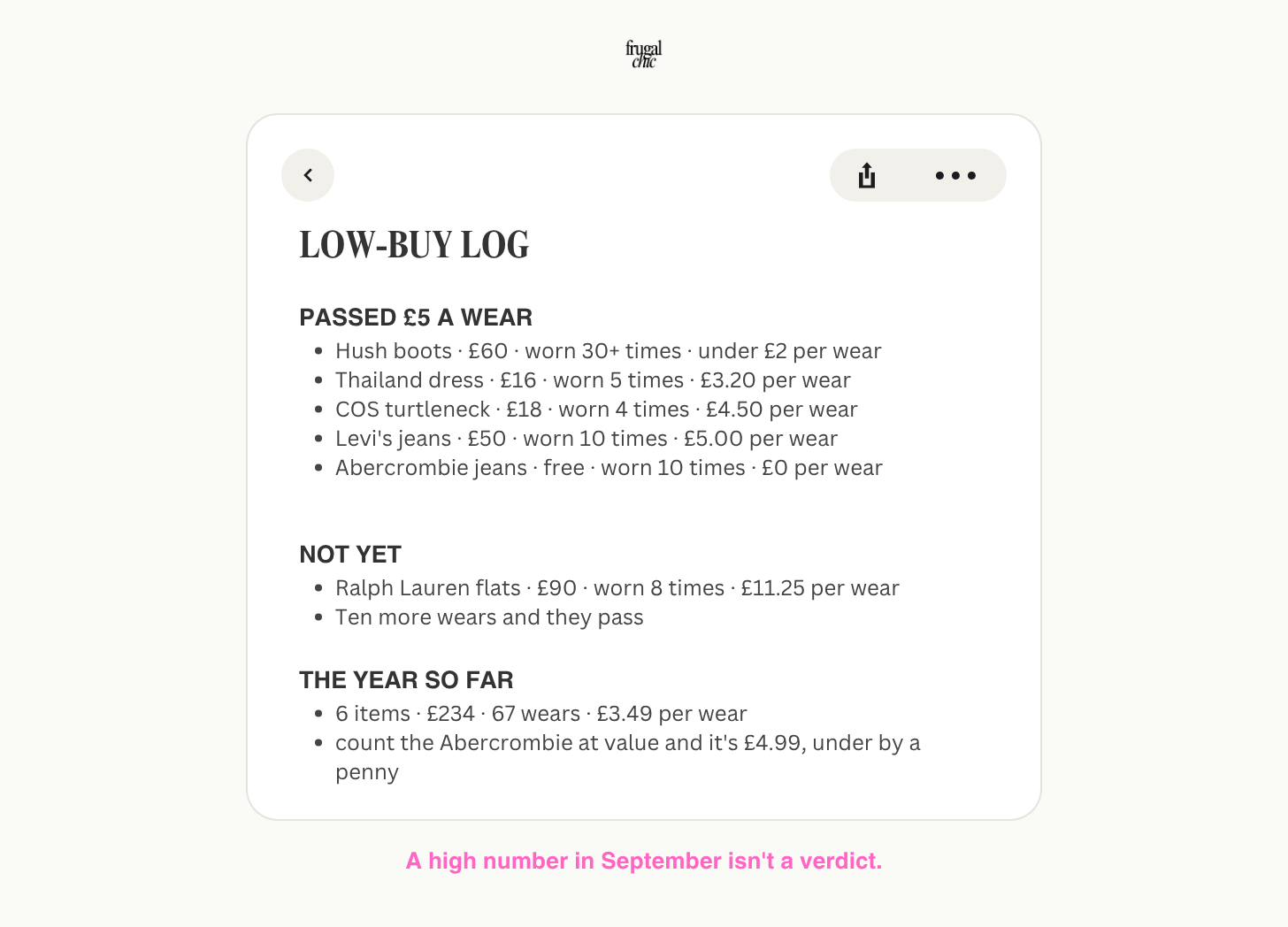
On paper that’s a win. However, I’ve spent all year telling you to check your cost per wear before you buy, and I’ve never once sat down and worked it out on my own purchases. So this is the log. Every item, what I paid, how many times it’s been out of the wardrobe, which ones I regret, and the sum that made the regret cheaper than it should have been.
In this issue:
The six items, in order, and what I actually paid
The log: cost per wear on every one, and the wears each still needs
The sum most people miss: what buying secondhand does to the real cost
The two purchases I regret
Marking myself against my own five rules
Why 12 was the wrong number, and what to set instead
The low-buy log template, to copy for your own year
Where it goes wrong
A note on the numbers: these are prices from memory, not receipts, so treat one or two as close rather than exact. Wear counts are what’s in my log as of this week.
The rules I set myself
If you’ve followed the challenge on TikTok you’ll know these. If not, this is the whole system in five lines.
Secondhand first. Vinted, eBay, vintage, before anything new.
Never pay full price. If it has to be new, there’s a sale, a code, or an email sign-up for at least 10% off.
The 30-day wish list. Write down the date you first wanted it. If you still want it 30 days later, you can buy it.
Cost per wear under £5. The price, divided by the number of times you’ll realistically wear it. Occasion wear almost never passes.
One in, one out. Something leaves for everything that arrives.
The rules are the easy part but the log is where you find out whether you actually kept them.
