


I can’t believe it’s been 10 months since I launched this newsletter. In that time, I’ve learnt a great deal about building a digital brand, IP, and consistency. After writing over 60 letters, I’ve got so much clearer about what Frugal Chic is.
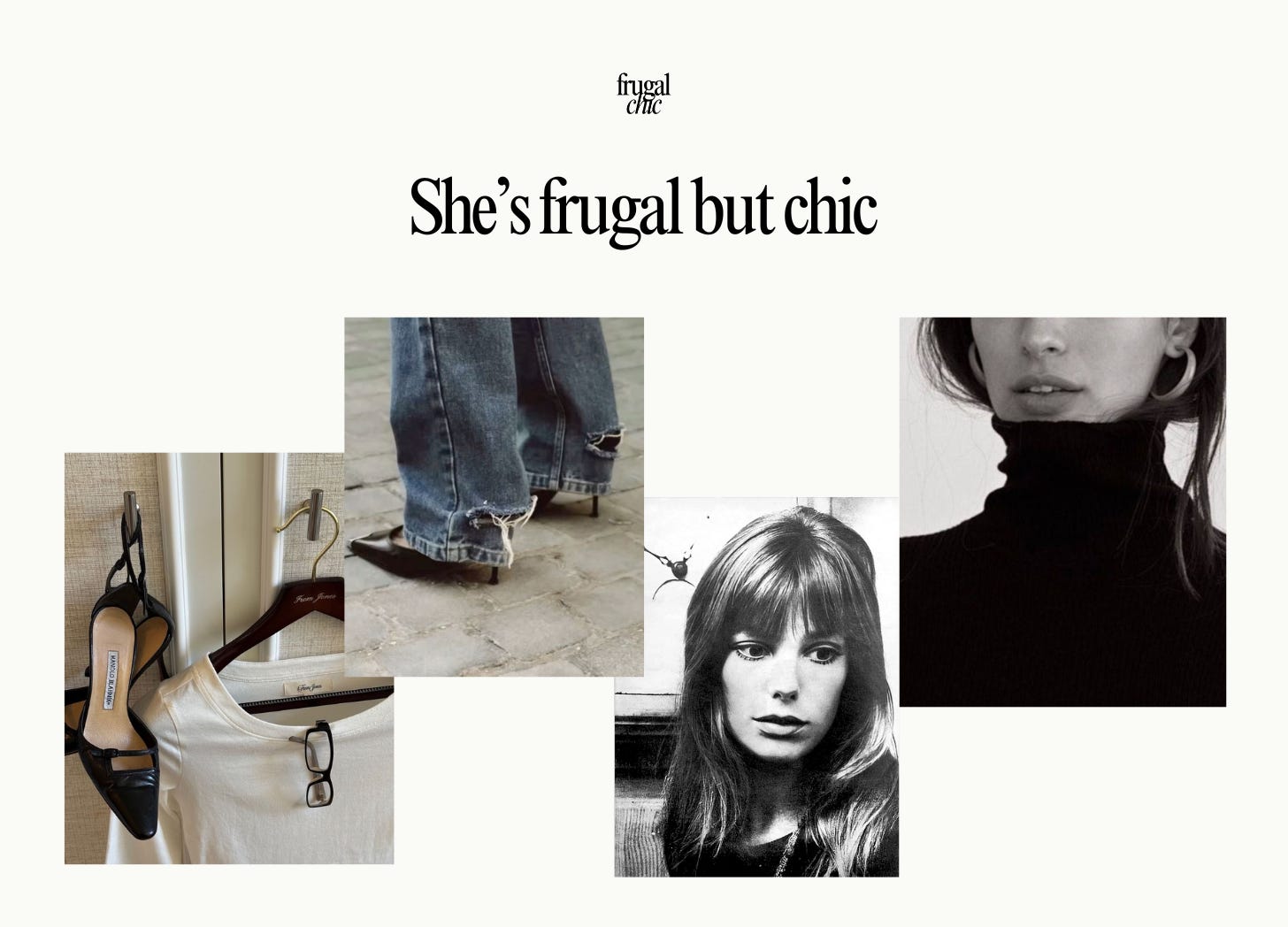
At the start, it really was a way to romanticise being on a £30k annual salary in London, living at home and not quite being where I wanted to be in life. I rarely bought coffee, I brought my lunch in a Tupperware everyday and I rarely bought new things. Now, my life has changed immeasurably as I made that switch from working in fashion and juggling content on the side (often working 60+ hours a week) to running my own business and becoming a creator CEO.
I now have more of a buffer to spend more freely. I pay myself a £50k income from my business and I often get to supplement my lifestyle with fun events and dinners as part of my job in the creator space. That being said, I still stick to the principles I set out on my journey to financial freedom.
While I’m not sitting there analysing every purchase, I still don’t buy much, and when I do, it’s on something I really care about.
Regardless of where you are, these are universal principles that can apply to many people regardless of personal style and preferences.
This is an updated 10 rules of being Frugal Chic:
Define your enough
Never stepping back to define what a ‘good life’ looks like to you will mean that you’ll always be raising the bar. This isn’t some wishy-washy gratitude practice either. It’s about having a clear idea of an ideal salary, ideal house price you’d buy (if you even want to buy), what a typical month would cost - workout classes, subscriptions. It’s about getting clear on what you’re working towards, not your FIRE number, but the number that would affect your everyday lifestyle now.
“Financial intelligence”
This is about closing the financial literacy gap. Learning about tax advantaged accounts, investing, pensions, how taxes work etc. I get it, you can go most of your life thinking “this isn’t made for someone like me”. I grew up with 0 financial literacy, and my only touchpoint of discovering the topic was talking to men about it, by sheer chance. But through watching YouTube videos from Nischa, Damien Talks Money and by listening to podcasts like Friends That Invest, I became so much more confident.
“Be chic where it counts, frugal where it doesn’t”
Smart spending is all about getting clear on what you value. There’s a misconception that frugality looks a certain way, on one end of the spectrum you have people reusing paper towels and being gross, on the other end, gaudy excess. Frugal Chic is a middle ground. It doesn’t mean never getting your nails done or never buying that iced matcha, it depends on what makes sense for your life. A mantra I live by is “you can have anything but you can’t have everything”. It’s simply understanding opportunity cost; what you spend in one area, whether that’s with time, money or energy, you take away from another area. So create a splurge vs save list - things you value vs don’t.
Value over cheapness
There’s a difference between being cheap and frugal. The frugal person really thinks about cost per use of an item. If you buy a £200 winter coat but wear it 60 days of the year, it’s £3 per wear. If you buy a £60 dress and wear it twice, it’s £30 per wear, even if the item costs less. The Frugal Chic woman measures purchases based on genuine use and quality. Yes, it’s worth noting, if your income is very limited, being cheap is your only option - and that’s why it’s ironically expensive to be cheap.
“The daily uniform”
Being an outfit repeater isn’t embarrassing, it is actually one of the easiest ways to become memorable. I have a personal brand, and someone once made a video saying, “Mia McGrath wears the same T-shirt and blazer in every video, and that’s what makes her content so visually strong.” And honestly, they were right. Repeating an outfit creates consistency. It gives people something to recognise you by. It becomes part of your visual identity. But this doesn’t just apply to content. In my personal life, I used to think I needed a different outfit for every Instagram post, a new dress for every event, and something fresh every time I was seen. Now, I’m not afraid to wear the same thing repeatedly because most people do not care nearly as much as you think they do, it is far better for your wallet, and having a personal uniform makes getting dressed so much easier. Sometimes, the most chic thing you can do is know what works for you and wear it again.
“Old before new”
Shopping secondhand is my default. If I want something I will look on Ebay, Vinted, charity shops, vintage shops, or even ask friends if they are clearing out their wardrobe before buying something new with tags. This is for a multitude of reasons but mainly I find vintage clothing to, of course, be much better quality, and you end up saving a fortune.
“Curate, don’t accumulate”
This isn’t about being minimalistic for the sake of it, but I have a monthly declutter of my wardrobe to save space, earn a bit of money and ensure all my clothes are actually getting cost per wear. I never get rid of anything I may actually want to wear just in an effort to save space, I am not the most minimal person, but I’d like to think I want a wardrobe and home full of things I love - and nothing more. I’ve never been a ‘collector’, I don’t value trinkets, and I don’t like clutter.
Reject lifestyle inflation
My income had quadrupled in the last year. Yes I actually only pay myself £50k a year, but the fact my business generates sometimes over multiple 5-figures a month, it can be easy to slip into new habits. Although I do now pay for things like taxis to get more work done or a meal prep service in busy times, overall I keep my personal spending at around £2,000 a month, basically the same as my old take home pay. I do this because if I kept raising the bar, it would mean I would then have to make a certain amount. The whole point of financial freedom to me is to increase optionality and decrease pressure.
Create more than you consume
Saving is great, but I’d be lying if I told you what got me here was just cutting out brunch and subscriptions. Instead, being frugal to me isn’t just about what you cut out, it’s what you strategically add. I’ve always loved side hustles because they are a way to increase my skillset and earn money on the side. It’s also diversifying income streams so I can again increase optionality and i’m never dependent on one person or source. This essentially means instead of being just a passive consumer, you spend more time on output than input.
Optimise for freedom
This all is pointless unless you understand why saving and investing money is important. Yes we all have different reasons, like short term goals, but overall - most people would attribute their financial discipline and efforts to wanting to achieve financial freedom. This comes in many forms, it could be your first £1,000 that means you could cover an emergency cost, your first £10,000 that gives you a buffer in case you lose your job, or your first £100k that gives you confidence that you’re a step closer to work optionality. It could be taking a pay cut to have more time or moving to a cheaper city, it entirely depends on your values and goals - but freedom is often at the heart of what the Frugal Chic chooses in life.
So I want to keep this as core principles and refer back to them - keep me accountable aha!
That’s all for this week,
Mia xx
Great article! Step one is so crucial. When you define your core values and what makes you happy, you can allocate funds to those things. Maybe for some that is a designer bag but it definitely isn’t for me.
From someone who’s been an outfit repeater her whole life, #5 made me laugh a little. I actually just joined Substack today (hi, terrifying 😅) and I write about money, mindset, and the corporate truths from someone who left a stable and thriving career (despite the perks and pension) after quietly building enough to walk away. So glad I found your work Mia 🩵