


You buy one good thing.
Let’s say that thing is a proper coat or the sofa you’ve been saving for since you moved in. For about a week it’s the best thing you own, and you keep catching yourself looking at it.
Then something odd happens. The boots you’ve worn happily all winter look wrong next to the coat. The cushions look tired next to the sofa. The rug that was fine on Tuesday is suddenly “the wrong shade”. Nothing in the room has changed except one thing, and now everything in it looks like it needs replacing.
If you’ve felt that, you’re in good company. A French philosopher felt it in 1769 and wrote a whole essay about it. He gave the essay a subtitle that could be this newsletter’s strapline: a warning to those who have more taste than fortune.
So this week we will discuss: what happened to him, the name for it, where it gets you now, and how to buy the one thing without buying the next six.
In this issue:
The scarlet dressing gown that cost a philosopher his study
The Diderot effect: why your things come in sets, and why one new thing breaks the set
Where it gets you now: the new flat, the new phone and the “complete the look” button
Five ways to buy the first thing and stop there
The scarlet dressing gown
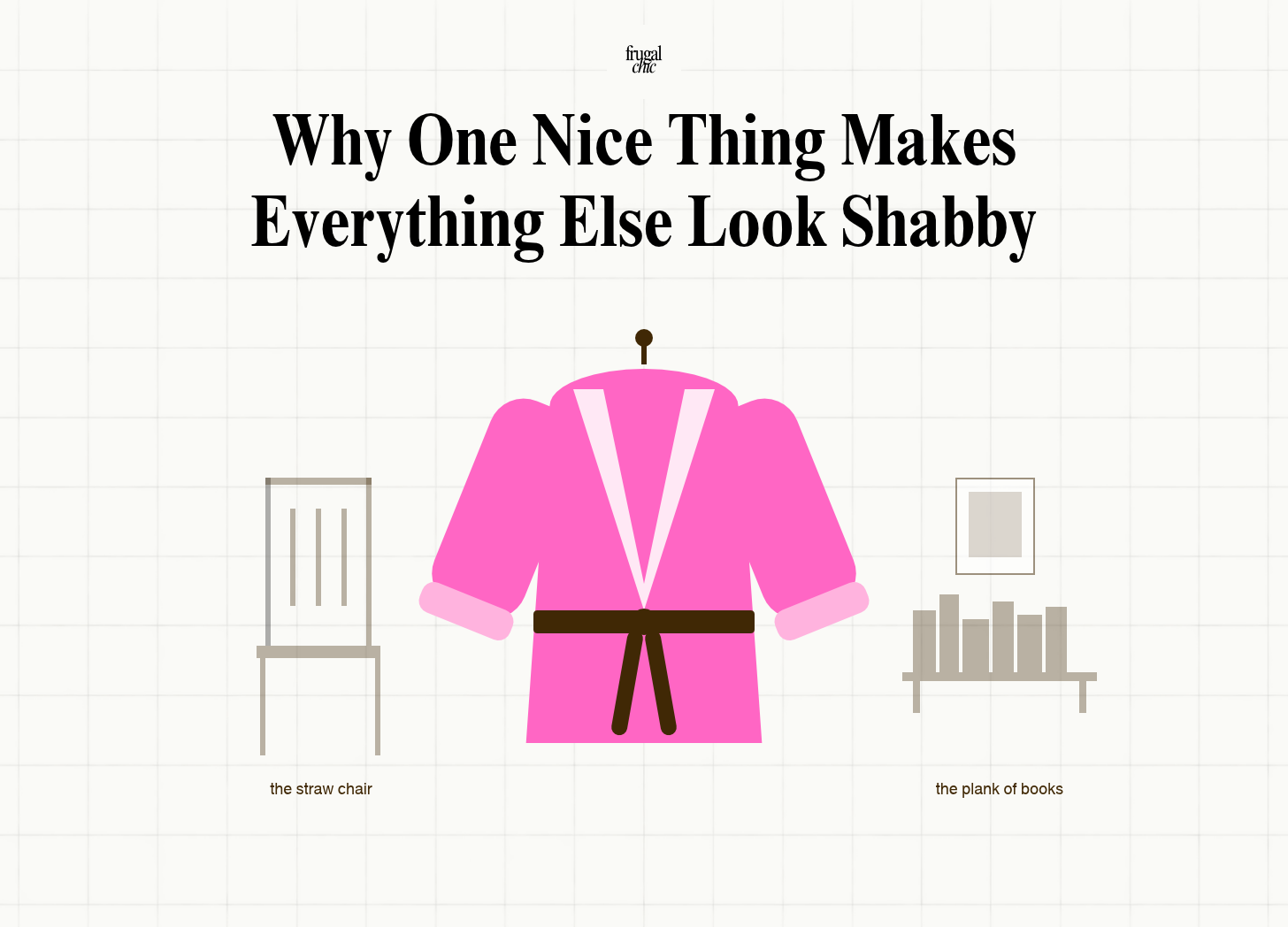
Denis Diderot spent twenty-odd years editing the Encyclopédie, which made him famous and did not make him rich. He wrote in an old dressing gown, a comfortable rag of a thing, and he loved it. He wiped his pen on it, he dusted his books with it. The ink stains down the front, he said, were the marks of a working man.
Then a wealthy patron sent him a new one: scarlet, beautiful, stiff. And from the moment he put it on, his study stopped looking like a study and started looking like a problem.
In his telling, the scarlet made everything else fall into line behind it. The straw chair was sent out to the hallway and a leather armchair took its place, the wooden table became a writing desk, the plank that held his books became a proper bookcase, the smoky old prints, pinned up without frames, came down and paintings went up, a large mirror appeared over the fireplace. One upgrade at a time, each one perfectly reasonable, until the only thing left of the old room was a scrap of worn rug. He writes that seeing it every morning reminded him where he’d started, and stopped his pride at the door.
The detail most retellings leave out is the debt. There wasn’t any. The pictures and the furniture came from the same patron who sent the gown, so he barely paid for the upgrade at all. And he still sat down and wrote a lament, because the cost wasn’t money, it was ease. I was the absolute master of my old dressing gown, he wrote. “I’ve become the slave of the new one.”
Fear the touch of wealth, he told his friends. “Let my example teach you.”

It has a name: the Diderot effect
In 1988 an anthropologist called Grant McCracken gave it a name. His point was that our possessions don’t sit in our lives as separate objects. They come in sets that feel like us: the coat, the boots, the bag, the flat, the mugs in the flat. They hang together at a level of quality, a price point, and a version of you.
Bring in one thing from a level above and it doesn’t blend in. It makes everything around it look like it’s arguing with it. So you start upgrading, not because the old things stopped working, but because they stopped matching. The new thing changes who you think you are, and after that the old things look like they belong to someone else.
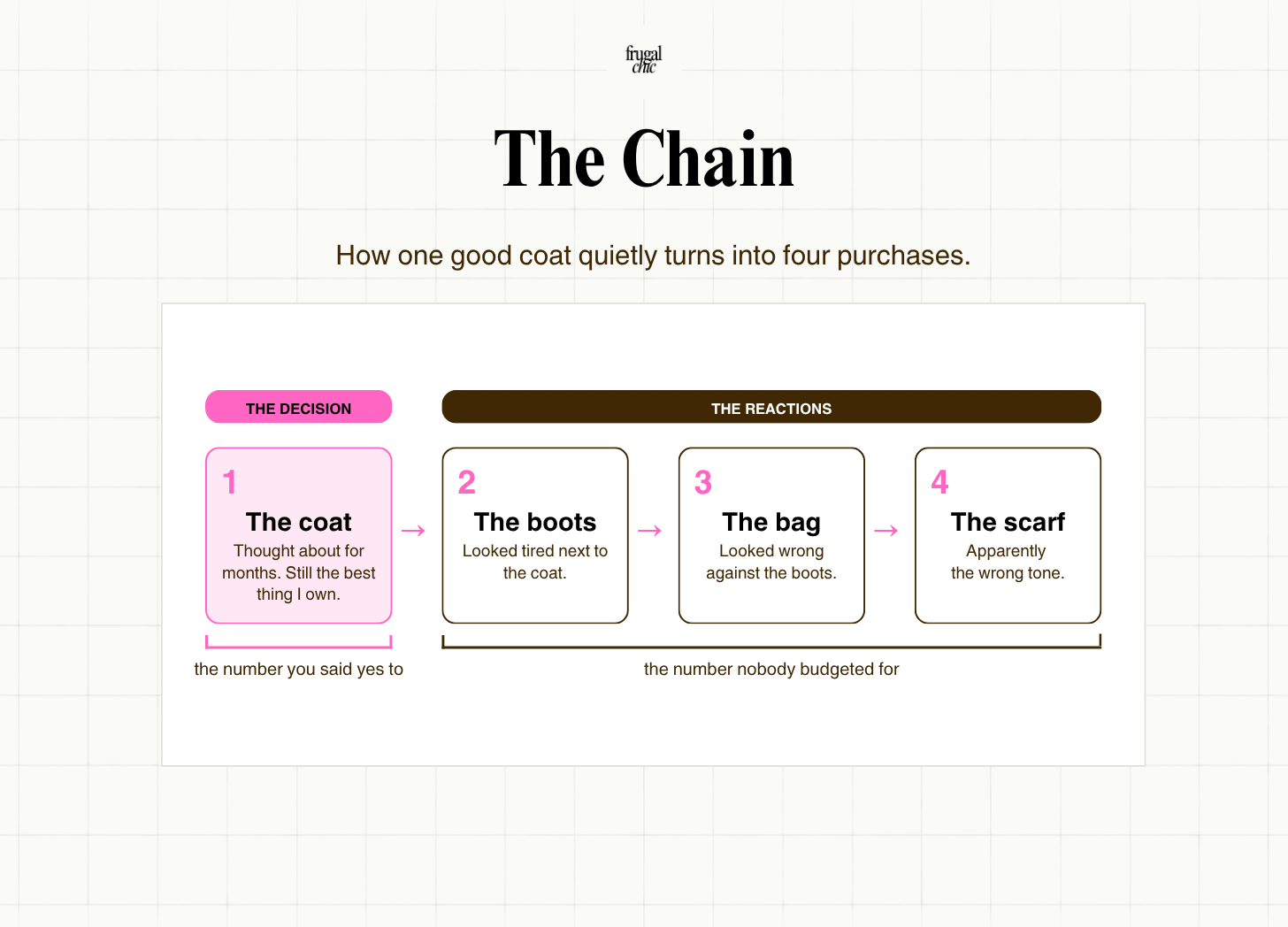
The bit that matters for your money is this. The first purchase is a decision. You thought about it, you saved for it, you can defend it. Everything you buy after it to make it fit is a reaction, and nobody budgets for the reaction. That’s where the money goes.
The Frugal Chic® rule: The first purchase is a decision. Everything you buy to match it is a reaction.
Where it gets you now
Retail runs on it. “Complete the look.” “Customers also bought.” The phone that needs the case, then the charger, then the earbuds. The gym membership that turns into leggings, trainers, a bottle and a bag before you’ve done a single squat. The whole idea of an “aesthetic” on TikTok is a Diderot set with a name, and most of the morning routine videos are a shopping list disguised as a personality trait.
The big one is the home. Aviva once surveyed a thousand recent homebuyers and found they’d spent just over £10,000 on the place in the first year, and a lot of that isn’t repairs. It’s new things to go with the new thing. A new flat is the biggest scarlet dressing gown most of us will ever buy, and everything you already own looks shabby in it for about six months.
The timing matters right now, too. October to December is peak Diderot. The party dress needs the shoes. The new sofa needs new tree decorations, because the old ones don’t go. If you’ve read the autumn lock-in article, this is the mechanism behind half the traps in it.
How to buy the one thing and stop there
You don’t beat the Diderot effect by never buying anything nice. You beat it by pricing the whole chain before the first link, and by learning to live with a bit of mismatch.
Price the chain before the first thing. Before the coat comes home, write down what it will “need”. If the answer is coat plus boots plus bag, that’s the number you’re deciding on, not the one on the coat’s label. Say yes or no to the whole chain.
Make the second purchase wait a month. You thought about the first thing for ages. You’ve thought about the second for ten minutes, and the only reason it exists is the first. Give it thirty days. Most chains dissolve on their own once the new thing stops being new.
Shop your own house first. Before you buy the thing that matches, look at what you already own. The “wrong shade” cushion is usually fine. The old bag works with the new coat if you stop asking it to be a different bag.
Keep one old thing on purpose. Diderot’s scrap of rug did more for him than the mirror did. Keep the ink-stained thing that still works, somewhere you can see it. It stops the rest of the room getting ideas.
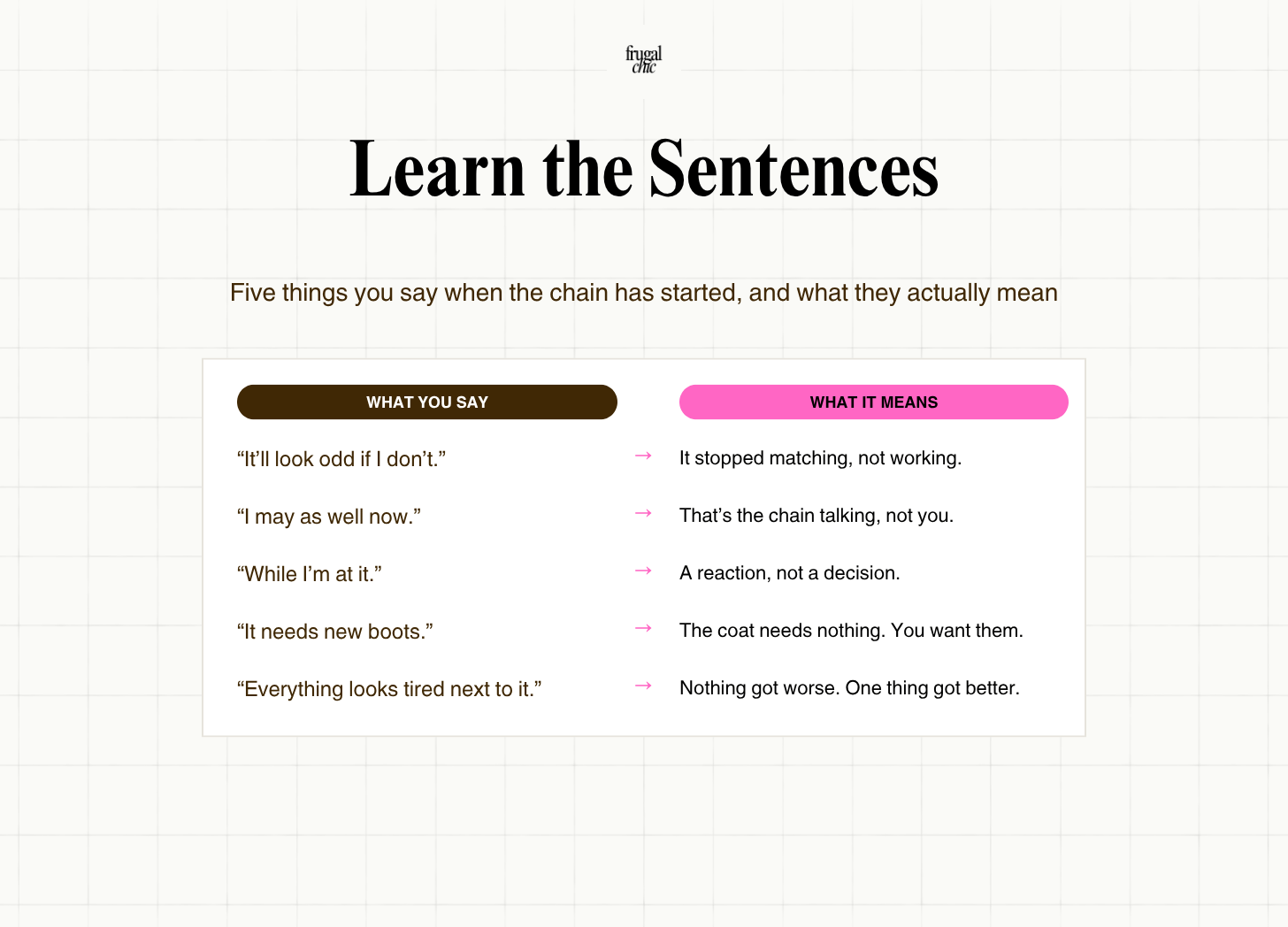
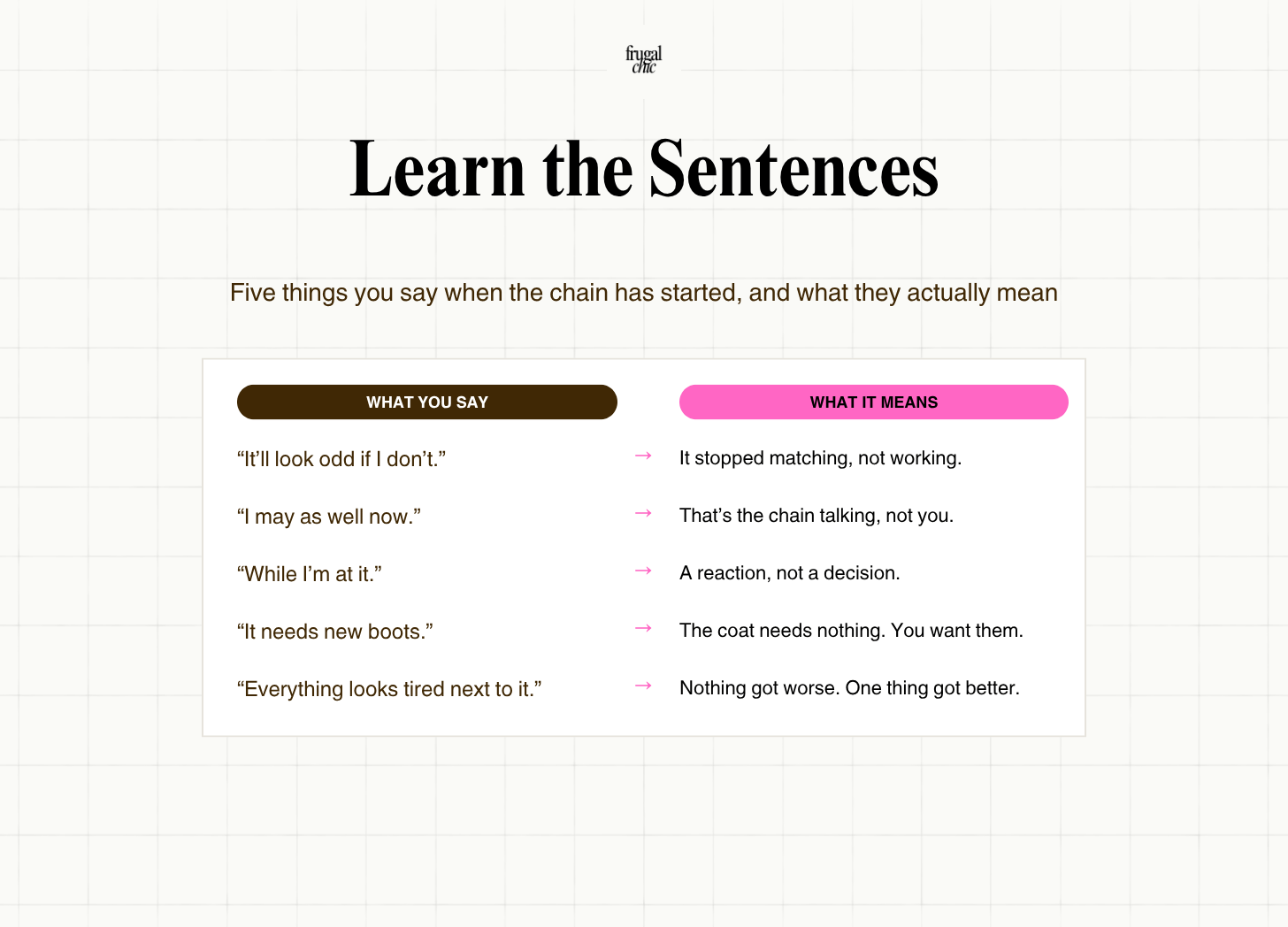
Learn the sentences. “It’ll look odd if I don’t.” “I may as well now.” “While I’m at it.” When you hear yourself say one of those, it isn’t you talking. It’s the scarlet.
This week, do one thing
Find your live chain. Take the last thing you bought that you love, and list everything you’ve bought since because of it. Add it up. That number, not the price tag, is what the first thing actually cost you. Then decide, out loud, whether the chain is finished.
The key takeaway here is: nothing in your home or your wardrobe gets worse when you buy something better. It only looks worse, for a while, next to the new thing.
The Diderot effect isn’t a reason to never own anything lovely. It’s a reason to buy the lovely thing with the whole bill in front of you, and to let the old things stay old until they actually stop working.
More taste than fortune is a perfectly good way to live. You just have to be clear about which one is in charge.
That’s all this week,
Mia xx
P.S. Wednesday’s paid post is the tool for this one: the matching tax. Before anything over £100 comes home, you price the chain it brings with it, in five questions, on one page, If you’ve been meaning to upgrade, this is a good week for it.
“I don’t need more clothes” somehow becomes “I can’t wear this with anything I own.” A super convenient loophole: the next three purchases now count as being sensible about the first.
This was such an informative read, Mia. Thank you for sharing! xx