


We all think we have main character energy, until we pause halfway through the day and realise we can’t quite remember when we actually made a decision for ourselves. The choices we make, the beliefs we hold, the values we keep - a lot of them feel inherited rather than chosen.
I feel this a lot. As a recovering people pleaser, or rather an overachieving big sister, I often find myself saying yes to things that don’t energise me, out of an imagined obligation. Or I’ll catch myself following a train of thought I heard on TikTok without questioning whether it actually makes sense in my life.
This isn’t another self-improvement essay. It’s something deeper than that. It’s something I’m still actively working through, day by day.
My only real “credentials” are that I went from being the shy kid, constantly told I was “too quiet”, to now getting paid to talk, whether that’s showing up online in front of millions of people or speaking on panels with hundreds in the audience. I used to be someone who made excuses and operated from limiting beliefs. Now my life feels like it revolves around opportunities that flow towards me, rather than ones I have to chase. The same goes for the people I’ve met, the rooms I’ve entered, and the network I’ve built.
So forget cold plunges, 5am mornings, and whatever the latest productivity ritual is this week. The biggest predictor of whether someone builds an interesting, successful, self-directed life isn’t how optimised their routine is. It’s whether they have agency. High agency, specifically. The ability to make decisions, create paths, and move through life without waiting for permission or external validation.
The term doesn’t have one clear originator. George Mack is often credited with popularising it, and I first came across it through DAN KOE, who speaks about it in the context of the creator economy and self employment. But regardless of where it came from, it clearly resonates because it names something most people feel is missing. We live in a culture saturated with advice, systems, and opinions, yet very few people feel genuinely in control of their own lives. At its simplest, high agency is the ability to make decisions and act on them without needing permission.

Gen Z has become slightly obsessed with this idea of free will. You’ll see it in content framed as “you can just do things.” And while that can come across as unserious or even naive, there’s something real underneath it. It’s the rejection of default paths.
The problem is, most people still move through life unconsciously. We go to school, get told a degree will secure our future, climb the corporate ladder, and retire at 65. There’s nothing inherently wrong with that path. For many people stability is the goal. The issue is not choosing that path, it’s believing it’s the only one available. That ambition, success, or a different kind of life is reserved for people who are already wealthy, connected, or naturally talented.
Becoming high agency starts with a mindset shift: you move from seeing yourself as controlled by circumstances to seeing yourself as someone who actively shapes outcomes.
“Life is happening to me” reflects a passive stance, where external events and other people dictate your direction.
“I am happening to life” reflects an active stance, where you take ownership of your decisions, beliefs, and actions, regardless of external approval.
So what does high agency actually look like in practice? One example is having interests or paths that don’t neatly make sense. A singer who codes, a gymnast who listens to heavy metal, a pharmacist who builds a personal brand online. For me, it’s studying fashion, working in fashion, modelling, and then building a personal brand around personal finance. If no one is slightly surprised by what you do, you’re probably playing it safe. This isn’t about being random for the sake of it. It’s about pursuing curiosity without waiting for permission or proof that you “fit.”
Another example is decision-making. Before I left my 9–5, I asked everyone. My partner, friends, strangers, other creators. I wanted certainty. But what I was really doing was outsourcing responsibility. We’re conditioned to seek authority from other people. Unless that independence is nurtured early, it’s something you have to actively build later. High agency people understand that there is no perfect decision. There is only action. You move, you learn, you adjust. What’s harder to recover from isn’t making the wrong decision, it’s not moving at all.
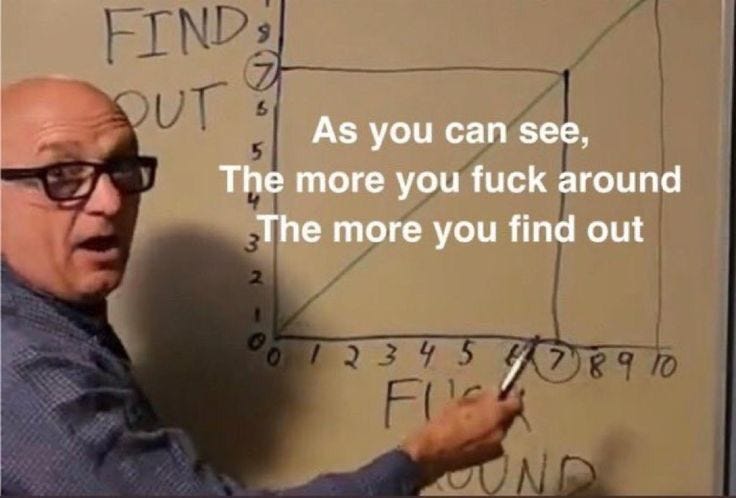
A less obvious one is how they think. High agency people aren’t rigidly attached to one ideology or way of seeing the world. They have values, but they’re not dogmatic. They can hold nuance. They see things in greyscale rather than black and white. They think critically, question assumptions, and don’t automatically align themselves with a group just for the sake of belonging. This isn’t about politics or religion. It’s about intellectual independence. If anything, they start by Googling stances that prove their point wrong.
The three components
George Mack describes high agency as three core traits. Remove one, and the whole thing collapses. 1
Clear thinking means not taking information at face value. When someone says “most people” or “studies show,” you ask which people, which studies. In a world of misinformation, this is becoming a survival skill.
Bias to action means not waiting for perfect conditions. You act, then figure things out. Most people think overthinking is intelligence, when it’s often just avoidance.
Disagreeability means not needing to be liked all the time. You can admit when you’re wrong, change your mind, and explore ideas without needing immediate certainty.
This is crucial to our mission at Frugal Chic: building wealth and financial freedom without sacrificing style.
Because taste, real taste, doesn’t come from following. It comes from deciding.
A tasteful person isn’t just someone who buys the “right” things. They’re someone who has spent time experimenting, refining, editing. They’ve developed discernment. And that only happens when you have agency. When you’re willing to trust your own judgement over trends, algorithms, or social approval.
Without agency, “chic” quickly turns into consumption. You’re not curating your life, you’re just reacting to it. Buying what’s trending, copying what’s validated, chasing a version of success.
Frugal Chic is about rejecting the default script. It’s choosing your own standards over the ones you’ve absorbed, especially when it comes to money. When you develop your own definition of what a “good life” looks like, your spending becomes more intentional, and far more aligned. You stop buying for approval and start allocating for freedom.
That same lens extends beyond spending. You choose a career path that optimises for autonomy and optionality, not just prestige or a higher salary.
Because in the end, the goal was never to look like you had a life. It was to actually be the one choosing it.
Action points:
1. make one decision daily without outsourcing it
No polls, no asking friends, no “what would you do?” texts. Start small if you need to. What you wear, what you post, what you say yes or no to. The point is training the muscle of self-trust.
2. audit your “default yes” moments
Catch yourself in real time when you’re about to agree out of obligation. Pause and ask: would I choose this if no one expected it from me? If the answer is no, start getting comfortable saying a clean, polite no.
3. replace overthinking with a 48-hour rule
If it’s not life-altering, give yourself 48 hours max to decide, then move. No endless research loops. No waiting until you feel “ready.” You’re not confused, you’re avoiding responsibility.
4. deliberately do one thing that doesn’t “make sense”
Follow a curiosity that doesn’t fit your current identity. Post something different. Learn something unrelated. Go to a room you feel slightly underqualified for. This breaks the idea that you need permission or a perfect narrative before you act.
5. challenge one belief you’ve inherited
Pick something you “just believe” about money, success, work, or yourself and question it properly. Where did it come from? Is it actually true, or just repeated? High agency starts when you realise a lot of your thinking isn’t even yours.
That’s all this week,
Mia xx
https://www.highagency.com/ High agency can be a confusing idea to understand because it’s not just one idea. High agency is like a tricycle. If you remove one of the wheels, it stops working.