


I’ve been thinking a lot lately about what I’d say to 18-year-old me about money.
I grew up with zero financial literacy and everything I know came from falling down a personal finance rabbit hole and making most of the mistakes first. Not long ago I was on £30,000 a year, so none of this started with a big salary.
These are the 25 lessons I wish someone had handed me at 18. Some took me years to learn and a few I’m still working on.
In this issue:
Looking rich vs actually being rich
Saving, and where it stops working
Your first £100k and your pension
Negotiating and debt
Your time, your freedom and saying no
Looking rich vs actually being rich
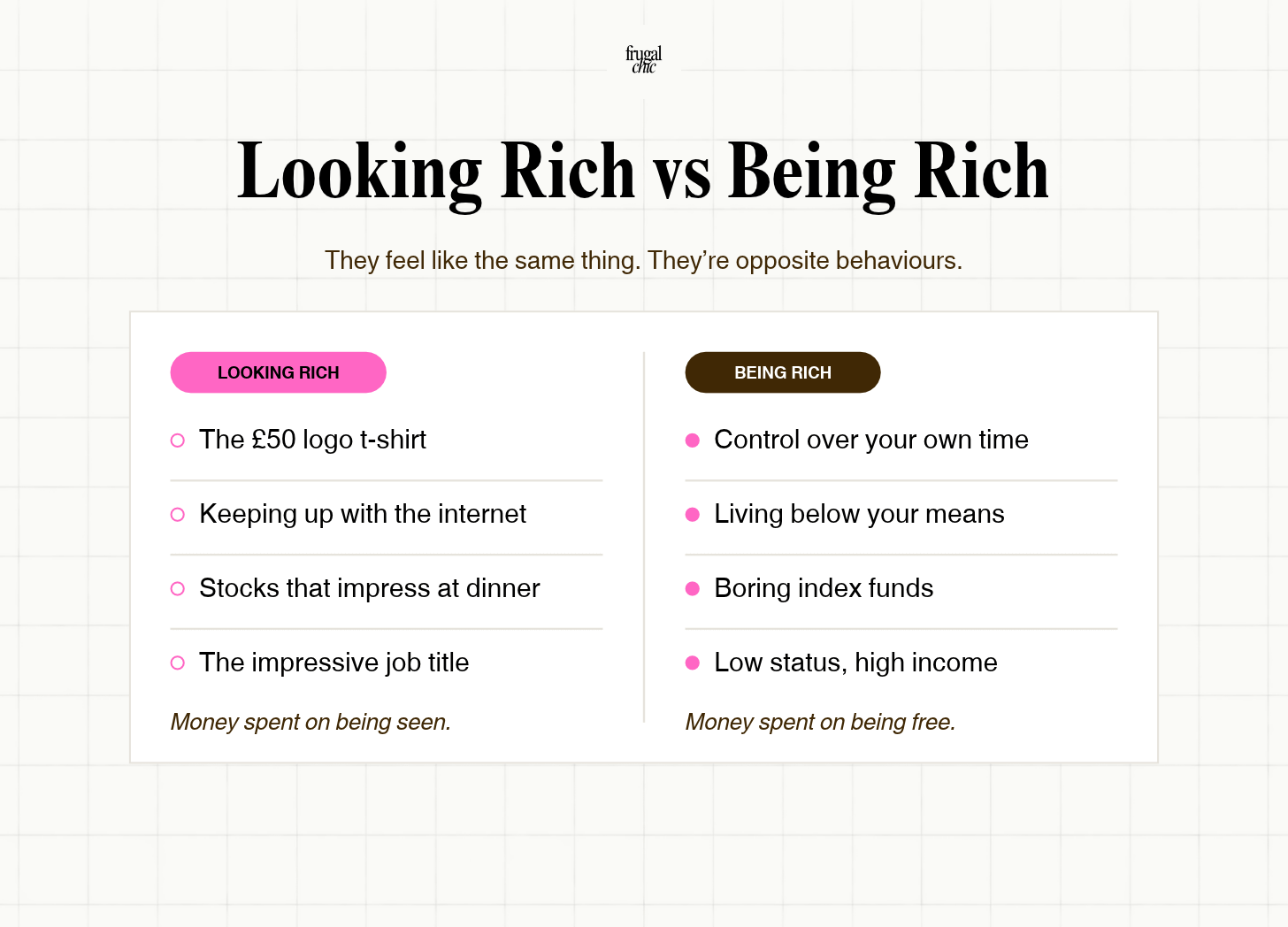
01. Looking rich and becoming rich are opposite behaviours.
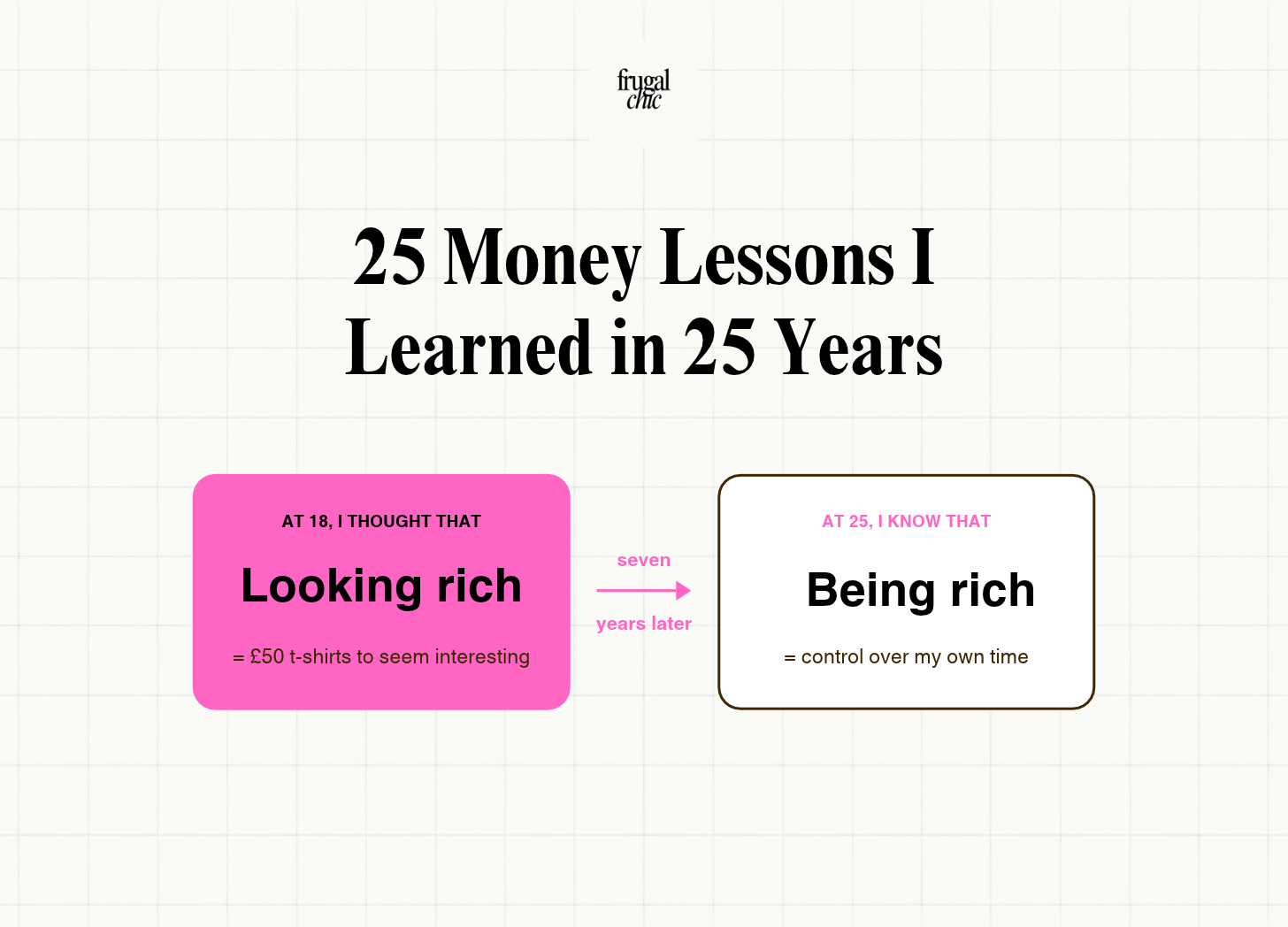
In my first fashion job I bought £50 Supreme and Palace t-shirts because I thought they made me a more interesting person. They didn’t, and I had less money to show for it.
02. Keeping up with the Joneses now means keeping up with the whole internet.
The Joneses used to live next door. Now they’re on your phone, all day, and you will never catch up.
03. Real wealth is control over your time.
Not having to ask for annual leave to see your family. The gym session at 3pm, meals cooked from scratch, and turning down work you don’t need.
04. Aim for low status and high income.
It’s a nod to Naval Ravikant’s advice to play wealth games, not status games. Plenty of plumbers, tradespeople and creators out-earn people in prestigious careers, without burning out on someone else’s ladder. More in Low Status, High Income.
05. Boring investments make the best money.
I’d rather own index funds that have done well over time than the exciting individual stocks that sound impressive when you share it with your peers.
Saving, and where it stops working
06. Saving builds stability, not wealth.
It’s the foundation, and you need it. Investing and growing your income are what build wealth.
07. Build your emergency fund before anything risky.
Three to six months of living expenses, for when you lose your job or the boiler breaks. Without it, investing or starting a business is a much bigger gamble.
08. Cash in a current account is quietly shrinking.
Plenty of people have hundreds of thousands sitting in savings, or worse, in a current account earning nothing, while inflation eats a little more of it every year.
09. Your time is worth more than the pennies.
At uni I hand-washed my clothes in the sink to avoid paying £3 a load. That makes sense when money is tight. After that, your hours are better spent learning skills that pay more.
10. Write everything down before you change anything.
Current account, savings, investments, pension, every debt, listed with no judgement. You can’t build wealth from “I just want to be rich one day”. I do mine in my Frugal Chic® budgeting planner.
Your first £100k and your pension
11. The first £100k is the hardest.
Charlie Munger, Warren Buffett’s right-hand man, said the first $100,000 is the hard part. Until you get there, every pound comes from what you put in and what you give up.
12. After that, your money starts doing some of the work.
That’s compound interest: your money making money on what it’s already made. At 7%, £100k makes £7,000 a year, more than most people manage to save. (7% is an example, not a promise.)
13. Small amounts aren’t pointless.
Think of a snowball rolling downhill. £20 or £50 a month feels like nothing at first, and then one day it doesn’t. Celebrate your first £100, £1,000 and £10,000 too.
14. Your pension isn’t a problem for future you.
If you’re employed, at least 8% of your qualifying earnings goes in, with at least 3% from your employer and tax relief on yours. Unless you genuinely can’t get by without that money, don’t opt out.
15. Self-employed? A SIPP is your pension now.
A private pension where you pick the investments (mine’s in the S&P 500, but do your own research). You get tax relief on up to £60,000 a year, or your earnings if lower, the growth is tax-free, and you can usually take 25% tax-free when you draw it.
Negotiating and debt
16. If you don’t negotiate, you leave money on the table.
Rent, bills, your phone contract, your pay. I used to avoid it in case it made me look greedy or ungrateful, or in case they said no. No is where you started anyway.
17. Always ask what the budget is.
When you’re offered a salary, a pay rise or a fee, don’t say yes to the first number on the spot. Ask what the budget is, then decide.
18. Know what you’re actually being paid for.
My first brand deals were £200, which felt amazing on a £12-an-hour day job. Then I took £700 on the spot, and the brand put ad spend behind the video until it hit a million plays. Content is paid on trust and attention, not hours. I’d left thousands on the table.
19. Not all debt is bad debt.
I have student loan debt and I don’t plan to clear it. In the UK it works more like a tax: repayments follow what you earn, not what you owe. I’d rather that money went into a house deposit, investments or my business. (High earner on a salary? The maths can go the other way.)
20. Klarna and credit cards are a different animal.
My student loan repayments drop if I earn less. However, if you miss a Klarna or credit card payment your credit score takes the hit. Rich people aren’t scared of debt, they’re just picky about which kind.
Your time, your freedom and saying no
21. A soft life needs hard work first.
Women carry costs men don’t, from the pink tax to maternity leave, so I get why leaning on a partner’s money is tempting. But if your finances are in someone else’s hands, you’re always beholden to them. I want a soft life I built myself.
22. Watch what people do, not what they perform.
Plenty of tradwife creators cooking elaborate dinners from scratch run content businesses with brand deals. They perform financial dependence while being financially independent.
23. Work out your FIRE number.
Take what you spend in a year and multiply it by 25. For a lot of people that lands near £1 million, and you’ll need to allow for inflation. My FIRE calculator does the maths for you.
24. FIRE isn’t suffering now to enjoy life later.
It’s knowing exactly what your freedom costs. There’s even Barista FIRE: invest enough to work part-time or chase the passion projects that don’t pay much.
25. Price your time like it’s money.
If someone asked you for £100, you wouldn’t just hand it over. So why did I give someone I barely knew four hours for a “pick my brain” chat? You can buy anything, but not everything.
The one I’d send back to 18-year-old me first is number 25. I waited until I was earning more to start protecting my time, and I could have done it from day one.
Which one do you wish you’d known at 18? Tell me in the comments.
That’s all this week,
Mia xx
This is what’s worked for me, not financial advice. Do your own research before you invest.
P.S. Everything above is what to do. On Wednesday I’m going through how, starting with the pension check for paid subscribers.
“A soft life requires hard work first” - love this! 👏🏽 I’m due to go on maternity leave in a few months and whilst I was feeling conflicted about having to significantly reduce investment contributions, over the last 4 years I’ve invested over £30k. That phrase has really reframed that for me. Thank you!
Soooo much good stuff in here 👏🏻👏🏻