


“I’m just bad with money.”
For years, that one sentence did a lot of heavy lifting for me.
It explained the overdraft at uni, it explained why my student loan never seemed to make it to the end of term, it explained the clothes I bought and wore once. And honestly, it was weirdly comfortable, because if being bad with money was just who I was, then none of it was really my fault.
The catch is that it also meant none of it was ever going to change.
I didn’t come from money. I started with £0 and zero leverage, in a fashion job that paid fashion money, in London. If you had told me then that I’d end up building a business from talking about money on the internet, I would have laughed, and then probably gone and bought something.
What changed wasn’t my salary. It was actually a conversation with friends about investing, where it slowly dawned on me that none of them had been taught this either. They had just decided to find out.
That was my first high agency moment with money, years before I knew there was a name for it.
In this issue:
What high agency actually means, and where the idea comes from
What it is, and what it isn’t
The five signs you’re financially high agency, in full
The asks that pay better than anything in your ISA
The Agency Audit, with my own answers
The flowchart I run on anything that makes me feel stuck
What high agency actually means
The term was popularised by George Mack, who wrote a long essay called High Agency which takes about thirty minutes of your time to go through. And trust me, it is worth the thirty minutes.
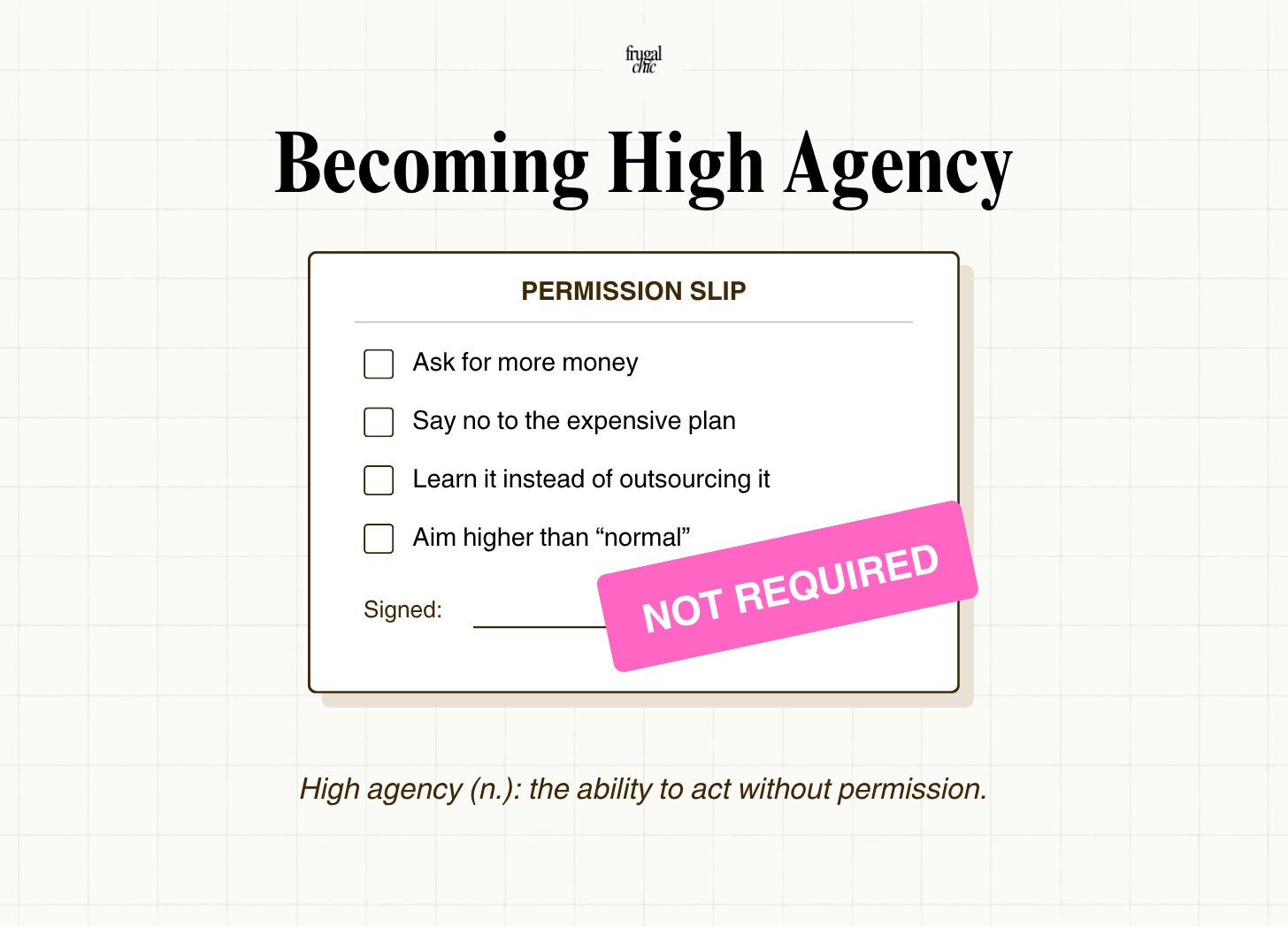
Mack’s version goes something like this. High agency is a mix of three things: clear thinking, a bias to action, and being willing to be a bit disagreeable when it matters. The way I’ve always put it is simpler. High agency is believing that you happen to life, rather than life happening to you. The ability to act without permission.
He has a test I think about a lot. If you were locked up in a jail abroad and had one phone call, who would you ring? Not the cleverest person you know. Not the richest. The one who would actually get you out. That person is high agency.
I’ve written about the high agency mindset before, mostly as a way of thinking about your career. Today I want to apply it to money, because I’ve become convinced it is the highest-return thing you can own. It costs nothing to acquire and it pays out for the rest of your life.
Below the line for paid readers: the five signs in full, the asks that pay better than any fund (with the sums), the Agency Audit with my own answers, and the flowchart I now run on anything that makes me feel stuck.
Low agency, high agency
Low agency with money sounds like this.
“I’m so bad with money.”
“I wasn’t taught any of this.”
“Money is for rich people.”
“That’s just what it costs.”
“I’ll sort it out later.”
Every one of those has the same shape underneath: these are my circumstances, and they’re never going to change. It’s a victim mindset, and I say that with love, because I lived in it for years. It feels like being realistic but it’s actually a loop.
High agency people might not have had a privileged starting point either. The difference is that they know the information is out there, and they go and get it. They do what they can from where they are. They negotiate the salary, the rent, the phone bill. They don’t rely on one income. They read the thing instead of waiting for someone to explain it.
Now what high agency isn’t, because this part gets misread.

It isn’t hustle culture. You don’t have to monetise your Sundays or get up at five to qualify. Some of the most high agency people I know are extremely lazy about the things that don’t matter.
It isn’t pretending the playing field is level, because it isn’t. Some people got a head start, a deposit, a surname, an invisible leg up. High agency is seeing exactly where your start line was and running anyway. Not denying the start lines exist.
It isn’t doing everything yourself because, don’t get me wrong, financial advisers are great. High agency is knowing enough to ask them a good question, and to know whether you need one at all.
And it isn’t blaming yourself for everything. Low agency says “it’s all my circumstances”. The opposite of that is not “it’s all my fault”. It’s “what, in all of this, is actually in my hands?”
The Frugal Chic® rule: Your starting point matters but it doesn’t have to dictate the rest of your life.
