


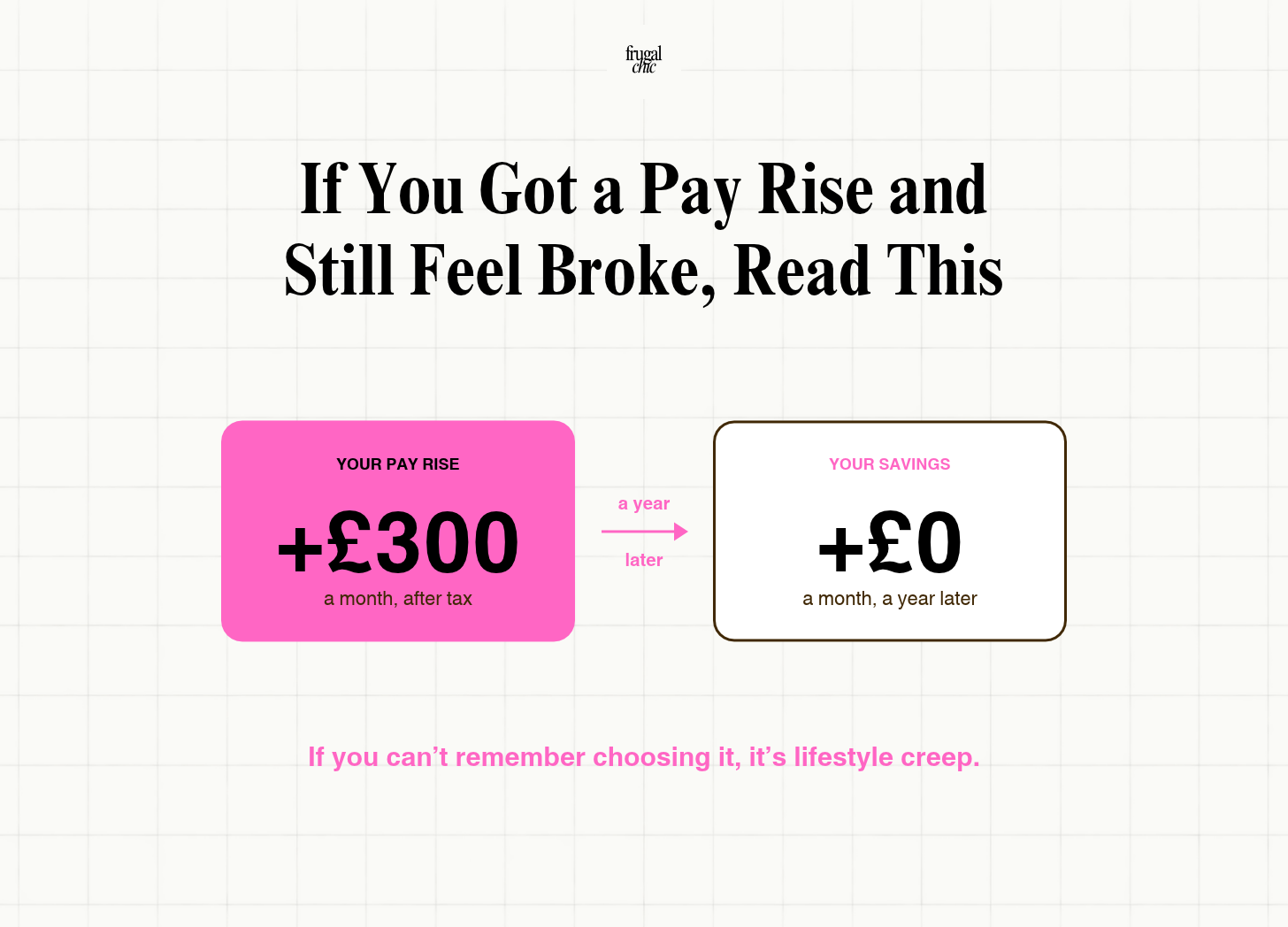
You earn more than you did a year ago. You can see it on your payslip. And yet the last week of the month feels exactly like it used to, the savings pot looks exactly like it used to, and you still check your balance before you tap your card.
If that’s you, you’re in very good company. On Sunday I mentioned a survey that found a quarter of people in the UK earning £100,000 or more had nothing left at the end of the month. That isn’t because they’re bad with money. Nobody gets a pay rise and actively decides to waste it. It goes in about forty small decisions, and none of them feel like a decision at all.
There’s a name for this: lifestyle creep. The good news is that it always leaves a trail. You can still see it sitting in your bank statements, line by line, as soon as you put the correct two months side by side.
So today we are covering exactly that. The bank statements, payslips, side by side and how you can tackle it to get more out of your money.
In this issue:
Why a pay rise can leave you feeling exactly as broke as before
The one question that sorts every increase: chosen cost or lifestyle creep?
What your pay rise is really worth each month
The lifestyle creep audit, step by step, and the one-page sheet
A worked example where the pay rise disappears to the pound
Where creep hides, and the pay rise rule I’d use from now on
Where a pay rise goes
Lifestyle creep, or lifestyle inflation if you prefer, is what happens when your spending rises to meet your income without you ever deciding that it should.
The tricky part is that it almost never looks like a big purchase. Nobody gets a pay rise and goes straight out for a Birkin Bag. More often like that it’s small upgrades. The filter coffee becomes a flat white, and then the flat white becomes a daily treat. The bus home becomes an uber ride when it’s raining, then when it’s late, then when you’re tired. Each step is tiny, and each one is something you can obviously afford now.
Then two more things happen.
First, the upgrade stops feeling like an upgrade. Psychologists call this hedonic adaptation: within a few weeks, the nicer thing is just the normal thing. You don’t enjoy the daily flat white any more than the filter coffee you used to have. You only notice it when you don’t get it.
Second, it only ever goes one way. Adding a cost feels like nothing. Taking it away feels like losing something, even when it’s the same £3. So spending ratchets up with every rise and almost never comes back down on its own.
Put those together and a pay rise can disappear completely without you buying a single thing you’d call a treat. It’s not that you spent it badly, you just never spent it on purpose.
