


“Frugal influencer” sounds like an oxymoron, doesn’t it?
Influencers mean trips, pictures on yachts and a new designer bag every other week. Frugal means penny-pinching, or the realistic everyday saving most of us actually do. The two don’t seem to belong together.
But I came across two podcast clips recently that made me think again. In one, Nara Smith talks to Emma Grede on Aspire about the money rules her dad drilled into her.
In the other, Isobel Lorna explains on Hot Smart Rich why she’ll happily buy a Birkin and then reach for the Tesco own-brand olive oil.
I know this one won’t feel relatable to everyone. The internet is very anti-influencer right now, and some of that is fair: influencer culture has a lot to answer for on overconsumption. But building a personal brand is more and more common, and it’s something I do. I’m a creator. And behind the scenes, I’ve had so many conversations where someone says “I’m not buying that, it’s not worth the money” about something they could clearly afford. They just choose not to.
So this week, let’s unpick it.

In this issue:
Why what you see online isn’t how anyone actually spends
The olive oil test: why frugal doesn’t mean cheap
Why frugality matters more, not less, as your income grows
Three things to take into your own spending
One thing to do this week
What you see isn’t what influencers spend
On the surface, influencing looks like the most glamorous job going: PR dinners, press trips, cars, clothes, endless skincare. Plenty of creators do buy expensive things, and there’s nothing wrong with that.
But a lot of what you see was gifted. A lot of it was bought for a shoot, a campaign or a brand deal someone was hoping to land. If you’re a lifestyle creator, what you buy is almost part of the business, the same way a photographer’s camera is.
So the designer bag in someone’s morning vlog tells you very little about what they spend on an ordinary Tuesday. Copy it and you won’t get their life, just their receipt. We all know social media isn’t reality. Sometimes we just need the reminder.
Frugal doesn’t mean cheap
Isobel Lorna is known for Porsches and Hermès. She started posting on TikTok at 19 while working night shifts in an Amazon warehouse, and by 25 she’d bought a Porsche, a Birkin and a house. Her viral mantra is “save the pennies and the Porsche will buy itself”.
On Hot Smart Rich, she explains that almost everything she buys comes back to her content and her brand image, so she treats it as an investment. She jokes she can pass anything off as one. But in Tesco, faced with the own-brand olive oil and the posh one, she picks the own-brand, because it’s got nothing to do with work.
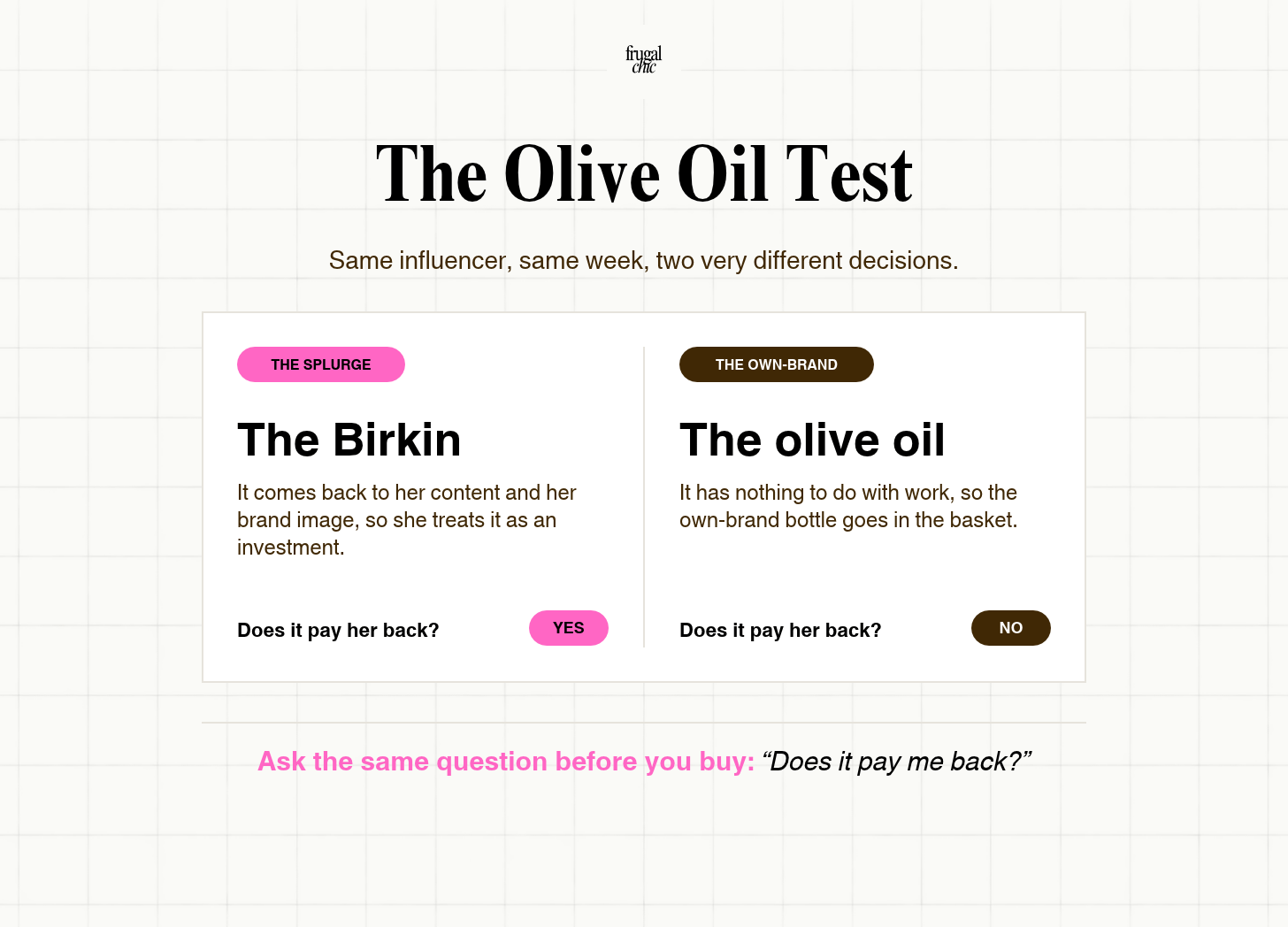
Some people will hear that and think workaholic. I hear a fellow frugal person. Frugal isn’t choosing the cheapest option every single time. It’s being really selective about where your money goes: spending properly where you get a real return, and cutting back where it doesn’t matter to you.
Take the Porsche. The content around it went viral. Views aren’t money, but I’d guess buying that kind of reach with paid ads would have cost her even more.
That doesn’t mean anyone should go out and buy a Porsche. It means influencers are playing a different money game. What’s a smart spend for them could be a terrible one for you, because frugal is relative to your income and to what a purchase actually does for you.
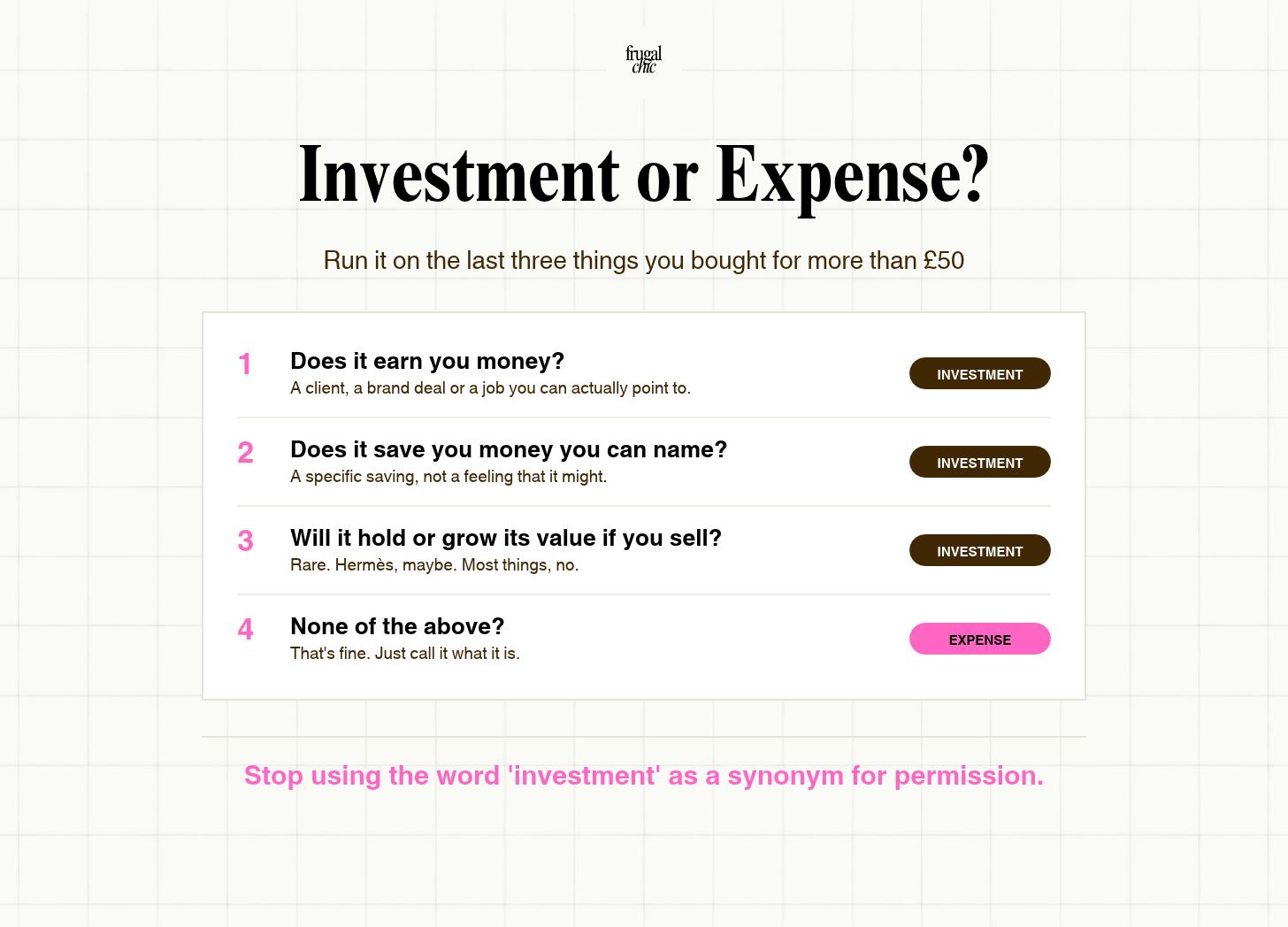
One honest caveat. As I’ve said before, clothes and bags aren’t investments in the way your pension or a stocks and shares ISA is. Even people who invest in handbags professionally argue that Hermès is about the only brand that meets an investment standard, and a bag only makes you money if you sell it. If it isn’t earning for you, it’s an expense, whatever the caption calls it.
The Frugal Chic® rule: Splurge where it pays you back. Own-brand the rest.
Frugality doesn’t stop when the money arrives
People assume that once someone’s making real money, frugality goes out the window. In my experience it’s the opposite: the people who keep the habit are usually the ones who stay wealthy.
Nara Smith is 25, has four children under six and runs a multimillion-dollar business. When Emma Grede asked about money, she went straight back to the rules her dad drilled into her: “invest your money, save your money, live below your means”. She says she’s still like that now. Obviously the business made the money, but if she’d spent it all, she wouldn’t have it today.
On a lower income, you’re often frugal because you have to be, and it builds security. On a higher income, it’s what builds wealth, because it creates a margin between what you earn and what you spend, and that’s where saving and investing happen.
It’s that old line: it’s not about how much you earn, it’s about how much you keep. A 2023 survey by RBC Brewin Dolphin found that 26% of people in the UK earning £100,000 or more had no money left at the end of the month. There’s even a name for it: HENRYs, or high earners, not rich yet.
The Millionaire Next Door, the famous 1996 study of how American millionaires actually live, found the same thing. Thomas Stanley and William Danko compared people of the same age and income, and the “prodigious accumulators of wealth” typically had at least four times the wealth of the under accumulators. Same pay, completely different outcome.
So yes, increasing your income matters hugely. But your habits decide where that extra money goes.
What to take into your own spending
Ask whether it’s really an investment or just a momentary desire. If you aren’t using it to earn money, and it isn’t one of the rare things that holds or grows its value, it’s an expense. That’s completely fine. Just call it what it is.
Build wealth before you flex. A lot of people spend to look like they’ve made it before they’ve built anything underneath. Watching influencers makes that lifestyle feel attainable, which is exactly what makes it a trap.
Play your own money game. Compare your spending to your goals, not someone else’s feed. Their brand deals don’t pay your rent.
And if you’re building a brand yourself, some purchases genuinely do pay you back, like the outfit that makes you look the part on a panel, or the laptop that lets you take on bigger work. Sometimes what looks like flexing is strategic spending. Just be as honest about the return as Isobel is about the olive oil.
This week, do one thing
Look at the last three things you bought for more than £50 and write investment or expense next to each one. To count as an investment, it has to earn you money or save you money in a way you can actually name. If you can’t name it, it’s an expense, and that’s okay. The point is to stop using the word investment as permission.
The key takeaway here is: The women who seem to have it all are often the ones being most careful about what they don’t buy.
That’s all this week,
Mia xx
P.S. On Wednesday, paid readers get the lifestyle creep audit: a one-page sheet for comparing what you spend now with what you spent a year ago, so you can see which increases you chose and which just crept in. If you’ve had a pay rise but still feel like you’re penny pinching and getting nowhere, you can upgrade here: