


Lately, I’ve been thinking about the term ‘girl math’. Is it really bad for women, setting us back decades? Or is it just a harmless joke? I guess it sits within the camp of ‘I’m just a girl’, and that often feels a bit infantilising.
What I believe came before that, and what I still catch myself saying, is, ‘This is more of an investment piece’ as I admire a £500 coat. As a fashion graduate who’s worked in luxury fashion, but also has a keen interest in personal finance, I can see a tension between knowing what a real investment is and just wanting to justify a purchase.
So let’s actually outline what an investment piece is.
In this issue:
What an ‘investment piece’ actually is, and when the term is just girl math in disguise
The difference between spending money and buying something that can genuinely hold or grow in value
How some women are turning luxury wardrobes into income-producing assets through rental platforms
Why resale value has changed the way I think about buying clothes
Whether having good taste can actually make you a smarter spender
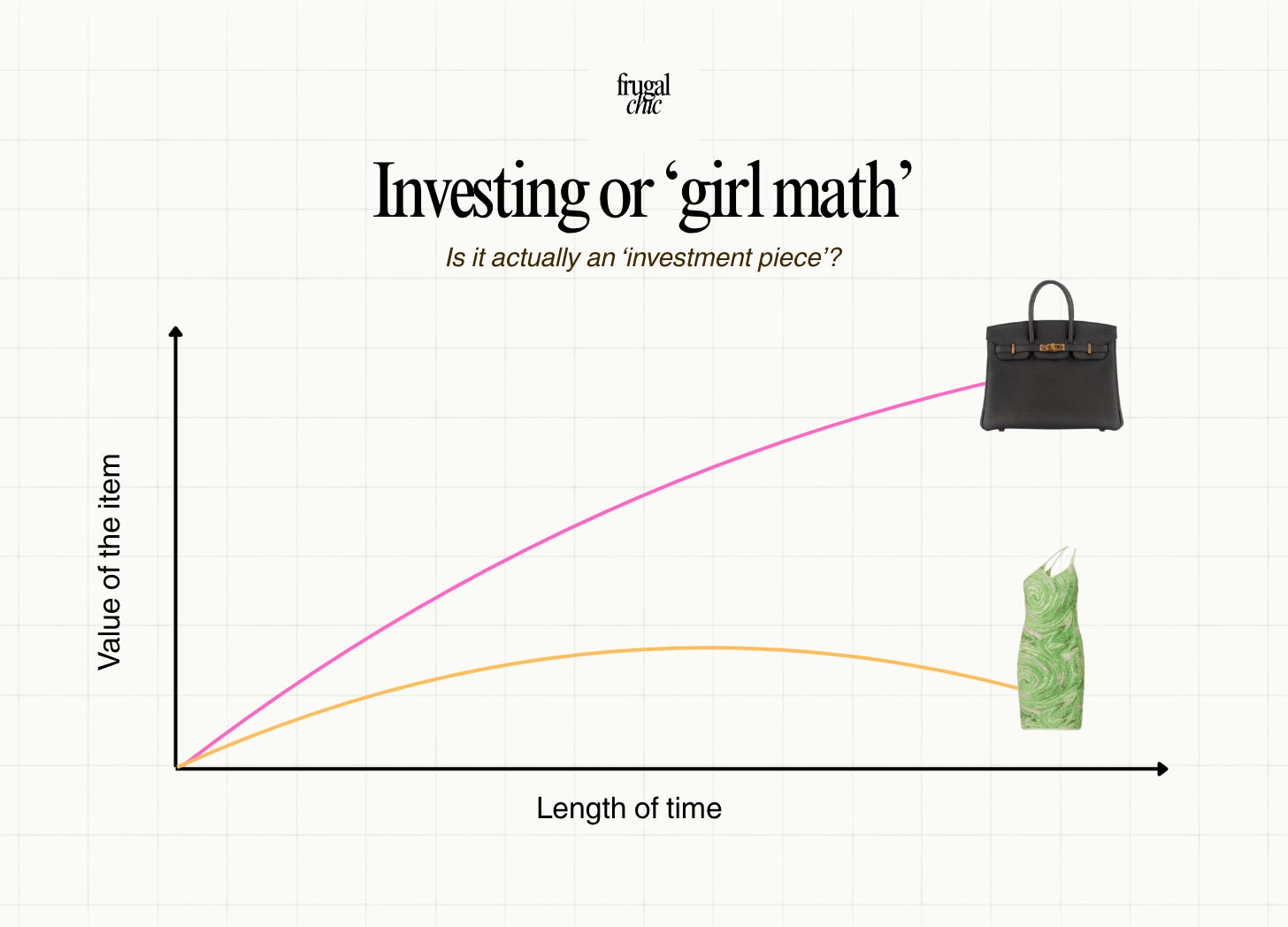
What does investment really mean?
An investment is an action you take to buy an asset, it could be stocks, bonds, ETFs or even alternative investments like art. The aim is, ‘I buy this today thinking it will maintain and hopefully grow in value’. Returns with investing, particularly with equities, are never guaranteed.
In the stock market, you can make money in two ways, capital gains which is where your initial investment rises in value and you make a profit. The other way is dividends, where companies pay a portion fo profits out to shareholders. I wrote about this here.
Working out whether the fashion item is an investment starts by defining how it differs from spending money.
Spending money vs investing it
When you buy consumer goods, typically, you’re spending money, not investing.
It sounds super obvious to point out, but once the money is spent, you usually aren’t seeing it again. For some of my clothes, where I bought the depreciated secondhand version, like my Burberry trench which retails for £2k, and I got it for £120 vintage, this will sell for the same price. But for a lot of my clothes, I’d be lucky to get a tenner.
It’s common knowledge in the personal finance world that a car is a huge liability because, as soon as you buy one, it starts losing value. A new car can depreciate by around 20% in its first year and roughly 50% within five years.
But often we conveniently forget that applies to fashion and beauty. Yes, we are buying it because we want to look nice, we need clothes practically and fashion extends beyond the superficial, it says a lot about culture, identity and even politics.
Therefore, it’s importance can’t be understated, but treating it like a fully fledged pension is something else.
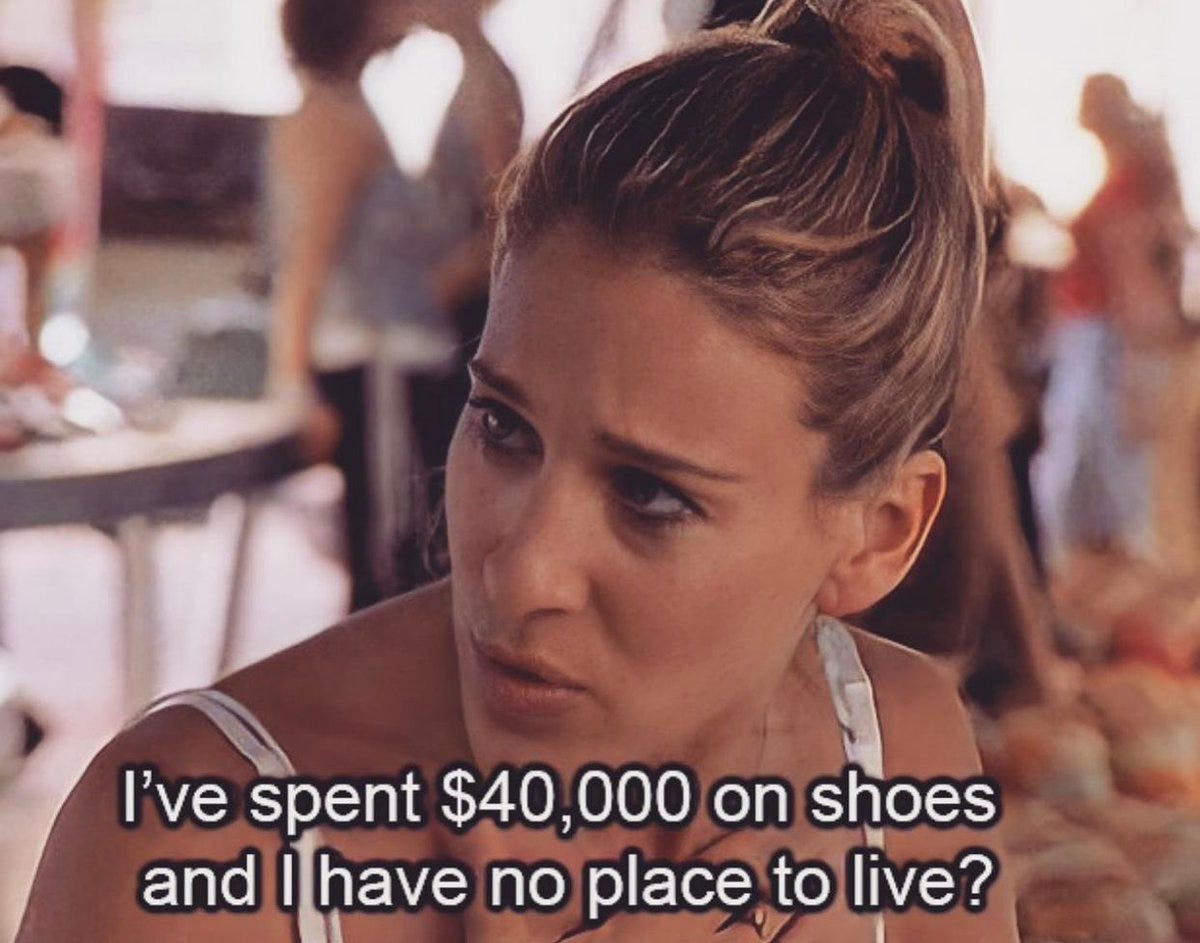
Fashion’s shelf life
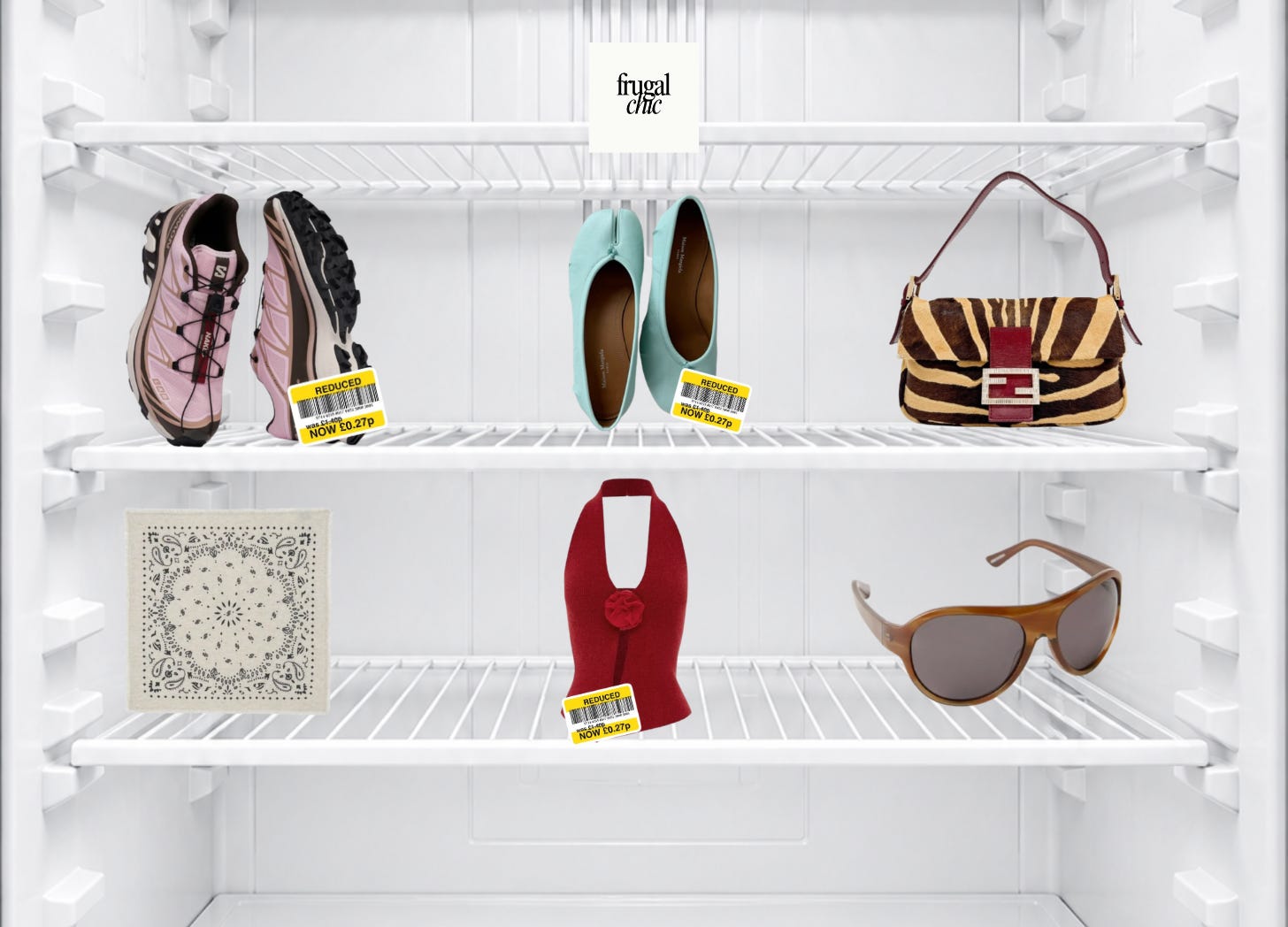
The mental shift I made to think about purchasing and the industry as a whole is fashion has a shelf life, just like food.
And this matters, because if we are going to see an item as an ‘investment piece’ we can’t see it as something to consume and dispose of once we are done with it.
What this means as a consumer is there is false urgency created, touchpoints, PR moves that all culminate in you thinking you need to buy something before it sells out, but really, it’s a brand or retailer needing to clear stock.
Yes, I think we are seeing a slight deceleration with the trend cycle, which helps.
I’d argue we’re in the post micro trend era. We had all sorts of trends like strawberry girl, gorpcore, cottagecore. Of course COVID played a part in us all staying inside, becoming chronically online and buying for entertainment.
We saw the pendulum swing the other way to quiet luxury. This got rinsed to oblivion with even fast fashion brands like Pretty Little Thing even trying a luxe-looking rebrand.
So now, we’re left with a few notable trends:
Maximalism: colour, dopamine dressing. A fatigue with minimal capsule wardrobes (BTW you can dress minimally and wear colour shock)
More decades and styles being referenced all at once (suggesting a higher empahsis of individual personal style - or the pursuit of it) prep, ‘80s yuppie, ‘20s Art Deco, prairie, sport, romantic dressing, indie sleaze, Americana.
Finding the thing instead of buying the trend. More emphasis towards secondhand. Not just because it’s sustainable but also because it’s cooler to have something no one else has. BoF says almost 60% of global consumers expected to shop resale in 2026.
What this means is actually it’s a little easier to be a consumer now than it was say 5 years ago when we were emerging from a post-COVID world because now there is more emphasis on individual style, wanting to be separate from the algorthim and wanting to consume secondhand.
That doesn’t change the fact that fashion’s shelf life is still much short than it used to be.
So, what items could you buy that might act more like an ETF than a reduced chicken sandwich from Tesco?
Rental market
There’s another way something in your wardrobe could start behaving more like an investment: it can make you money.
I recently attended a party hosted by By Rotation, and it completely changed how I think about luxury. As someone who champions intentional spending, I am naturally frugal. When I needed a dress for Cannes, spending £700+ on a Zimmermann piece I’d only wear a handful of times made zero financial sense.
The cost per wear would have been a disaster. Renting it instead felt like the ultimate money move.
But what interested me even more was the other side of the transaction: the women lending the clothes.
I struck up a conversation with one of the platform’s top lenders. She didn’t talk about her clothes like outfits. She talked about them like stocks. “I bought this specific piece knowing exactly how it would rent,” she told me, before explaining how she’d travelled to New York just to get it, without even knowing whether they would have her size left.
That completely fascinated me.
We’ve always known there’s a market for high-ticket secondhand pieces like Hermès Birkins, certain watches or collectible fashion. But these women weren’t necessarily waiting for something to appreciate in value. They were buying pieces they believed people would repeatedly pay to borrow.
In other words, the return wasn’t necessarily coming from selling the asset. It was coming from owning it.
For decades, men have been celebrated for having a tactical eye for things like watches and vintage cars. Seeing the amount of data, instinct and knowledge some of these women had for spotting high-demand fashion pieces felt like the same skill applied to a completely different market.
And I’ve started noticing it more online too. I recently saw a creator who said she’d made over £60k lending out her wardrobe, eventually turning it into her full-time job. Another lender shared that a single dress had returned 500% of what she originally paid for it.
Peer-to-peer rental platforms aren’t just useful if you want to wear something expensive without buying it. For some lenders, a wardrobe can actually become an income-producing asset.
I’m obviously not suggesting you ditch your index funds and start panic-buying Zimmermann dresses. But for the right person, with a genuinely good eye and an understanding of what people want to rent, I can see why it works as a side hustle.
And it also made me realise that I’d been thinking about my own wardrobe in a similar way for years, just through resale rather than rental.
Resale
I used to be seriously into reselling, more specifically vintage clothes on the platform depop in its ‘hayday’ before everyone migrated to vinted. I loved going to charity shops or looking on ebay to find things that were undervalued. Carefully researching what different labels meant from different eras.
This skill taught me to treat my wardrobe like a stock portfolio, there is no way I was going to buy an £100 dress if I could look on ebay and see it new with tags for £30.
My best moment reselling was volunteering at a charity shop. I remember tagging some items when I spotted a patchwork coach bag on the shelf. To the untrained eye, it really just looked like an old dusty handbag. To me, it was worth at least £60-80. I bought it for £8, I got home, cleaned it up and listed it for £80. As a 21-year-old this felt different to any money I’d made working in a gift shop or at my internships where I was paid £8.50 an hour.
Reselling taught me an important skill that I now use in investing and my business, to know how to market and sell a product. I didn’t just take a dull flat lay image, I showed that outfit it might go with, how it looked on, I used keywords and SEO.
While it helped with my business skills, it also helped me with developing an eye for quality.
Having an eye
Now, at this point, you may be thinking well I don’t want to see my wardrobe as a small business, I kind of just want to buy what I want. Well that’s where I think having taste comes in. Unlike the other methods that turn into fully fledged side hustles, I believe ‘having an eye’ is a skill you can develop.
Now, I am not going to write a whole essay on seams and ways to look for quality, instead, what I want you to do is start noticing. When you go shopping, don’t even think about buying something without checking the care label.
I personally try to avoid synthetics where I can, when I am shopping online I’ve got quite good at noticing when something has say nylon in it because it has this artificial sheen.
I often scroll on Vinted, not to buy anything, but as research (or so I tell myself). Being on the platform as a buyer or seller you start to notice the brands that hold their value and ones that don’t.
It’s not an exact science, but I’ve found that recognisability maters. It could be a £600 pair of shoes at retail, but if no ones heard of the brand and there’s no demand, it doesn’t retain its value.
Similarly, if lots of people are constantly selling the same item, and it looks like it was released recently, it does suggest it wasn’t good quality or the trend was too shortlived.
There’s so many factors you could consider but honeslty, it’s quite hard to describe what having an eye really is. It’s being able to identify out of even a new collection, what would be the item people would be annoyed about selling out?
Overall, having that level of consideration when shopping can almost definitely have a positive impact on your finances.
When it comes to ‘girl math’, I’m not one to get super offended by it. But that’s because I am financially literate. I do think as women we should stop downplaying our ability to be great with money and to learn about it. After all, we typically manage the household budget and are statistically better at investing.
An investment piece could be considered a genuine investment if you see it holding the value you bought it for, but I think it’s rarer than we’d like to admit.
That’s all this week,
Mia xx
Want more stories like this? Pre-order Frugal Chic for Jan.
The rental business model is so fascinating. The businesses that operate them rarely succeed (low margins and a logistical nightmare of managing the returns and cleaning fees), but for the average person renting out their own wardrobe hero’s as a side hustle income generator it feels clever.
I would love to hear from more people who do this.
Love this Mia - the rental method is so interesting to me, especially as someone who absolutely doesn't 'dress up' in their day to day.
For me when I see a piece of clothing as an 'investment' it's more about the cost per wear over its resale value or label; it might simply be an investment because it's saving me money by not buying a replacement of that product in, say, a year or so. For example, my biggest 'investment pieces' are my walking shoes that I wear at least twice a day to walk my dog that I bought for £40 from Go Outdoors almost a year ago, and my winter coat that I bought for £60 in 2022 and is yet to even start fraying at the edges even though I wear it every single day between about October and March. I've not had to buy a new coat every year to either keep up with the styles or replace a wearing product, which I guess also falls into the 'avoiding trends' theme too.