


Every September the same thing happens. The weather turns, the shops go brown and burgundy, and somewhere between the first cold morning and the first pumpkin spice advert you become convinced that nothing you own is right for autumn.
It isn’t true, you wore autumn last year and you have the clothes. What you don’t have yet is a plan for using them, and the plan is the bit the shops would rather you skipped.
I worked in fashion for a few years before any of this, and I’m nine months into a low-buy year . So this is the wardrobe version of last week’s lock-in : five rules for the season, and none of them start with buying something.
In this issue:
The summer declutter to do this week, while you still remember what you wore
Why I wear brown, not burgundy, and what that has to do with your money
The four jumpers I actually wore last autumn, and the six I got rid of
Which fibres are worth paying for once it gets cold
How to plan an investment piece so it’s not an impulse
Declutter summer now, while it’s still fresh
This is what I am always trying to do before the weather does it for me. After I spent three months in my summer wardrobe, I know exactly which pieces earned their place and which sat there looking hopeful.
I keep a small capsule for holidays and I’m strict with it. Anything I’ve accumulated and haven’t worn this summer gets moved on: sold, donated, passed to a friend. It’s ok to let it go. I’d rather have a curated wardrobe than a full one.
The next thing I do is store what stays in one place and out of reach. This can look like a case under the bed, vacuum bags or the top shelf. You shouldn’t be looking at linen trousers in November, and you shouldn’t be buying a third pair of sandals next May because you forgot about the first two you already have.
Don’t default to burgundy
Every autumn there’s a colour you’re told is essential and that’s usually burgundy. From what I remember, it was burgundy last year too.
I personally prefer brown. It goes with more of what I already own, it suits me better, and I’ll still be wearing it in five years. So that’s what I wear, and no amount of styling videos will change it.
That’s the whole thinking process you should have before you rush out to shop. Not “is this the autumn colour” but “is this my colour”. If someone has to convince you that you need something, you most likely don’t. Stick to your personal style, it’s cheaper, and it’s the reason your photos from three years ago still look good.
Ignore the “new season, new wardrobe” propaganda
You do not need a new set of clothes every six months, nobody does. “New season, new wardrobe” is part of a marketing calendar, not a real one, that you need to adhere to.
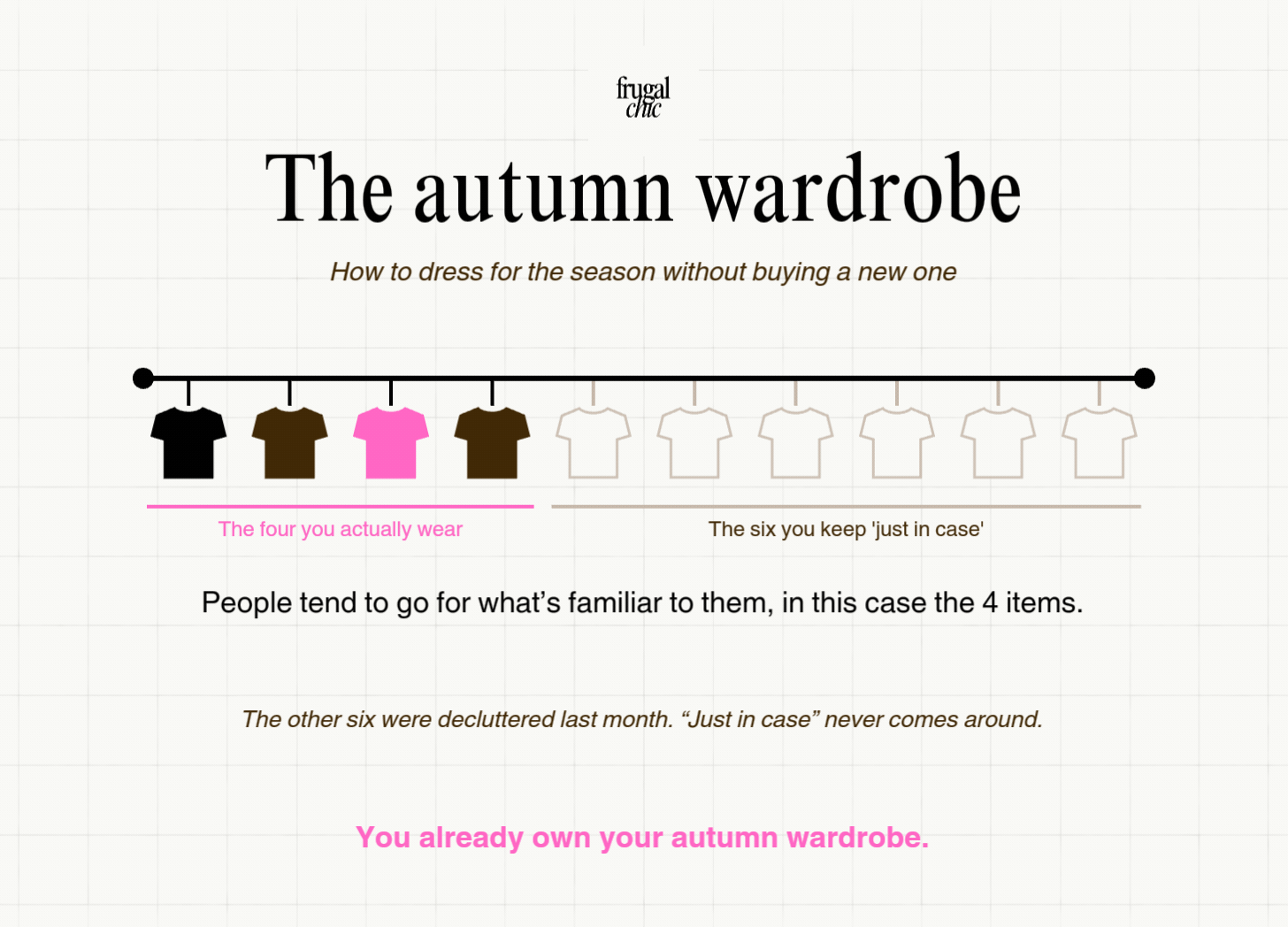
So before you buy anything, work out what you actually wore last autumn. I do this through photos. I film myself most days when I create content so I scrolled back to last October and counted. The same four or five jumpers, on repeat, for three months.
Meanwhile there were another six in the drawer that I was keeping just in case and I decided to declutter those last month. Just in case, most of the time, doesn’t come around.
You’ll find the same, I promise. The pieces you love get worn to death and the pieces you bought for a version of yourself that doesn’t exist sit in the drawer. Start the season from your four pieces, not from zero.
The Frugal Chic® rule: you don’t need a new wardrobe every season, you just need the four pieces you always grab anyway.
Natural fibres, more than ever
Natural fibres matter all year, but as it gets colder they stop being a preference and start being the difference between warm and not warm. Wool, heavy cotton knits, cashmere. Alpaca or mohair if you want something more interesting texturally.
Acrylic and polyester don’t breathe, they pill within a season, and they’re why a £20 jumper feels like a £20 jumper by November. You should always check the label before you check the price. A secondhand 100% wool jumper for £15 will outlast a new acrylic one for £40, and look better doing it.
Plan your investment pieces, and be honest about what that actually looks like
I wrote recently about whether your clothes are actually investments, and the short version is that most of them aren’t. An investment goes up in value, whereas a blazer goes down the moment you wear it. The only way it earns the word is if you wear it constantly, or you do the cost-per-wear maths and it comes out cheaper than the fast version.
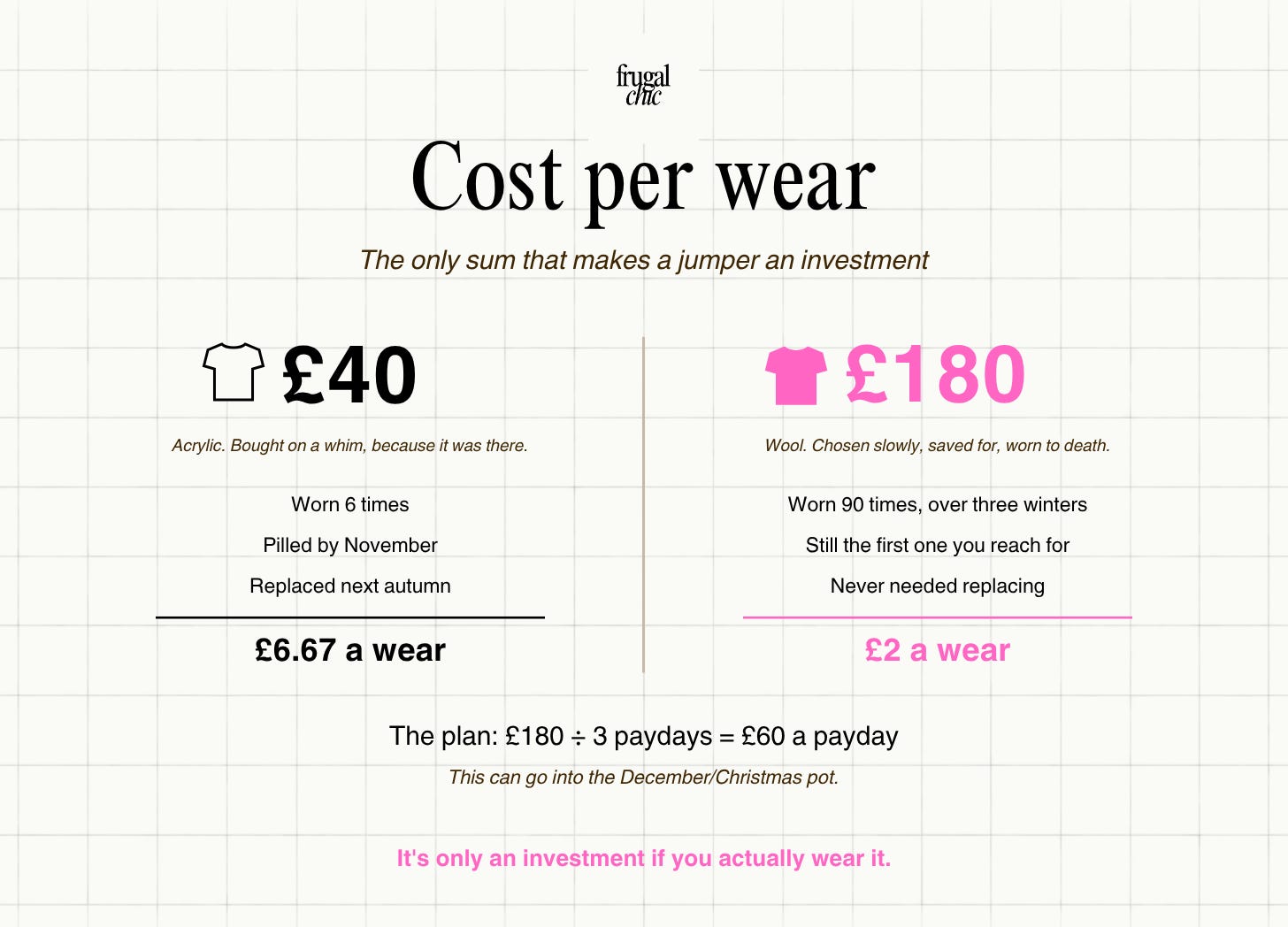
So if there’s a dream piece this autumn, a coat, a blazer, proper boots, plan it. Decide what it is, find out what it costs, and divide that by the paydays between now and when you actually need it. Mid-range, female-founded brands like GROES and Odd Muse put a blazer somewhere around £150 to £250, which is three paydays of £60, rather than one impulse and a credit card.
Then it goes on the list instead of placing it in the basket straight away. If you still want it in December, it’s the one thing you buy, with a clear head, with money that’s already sitting there.
The capsule maths
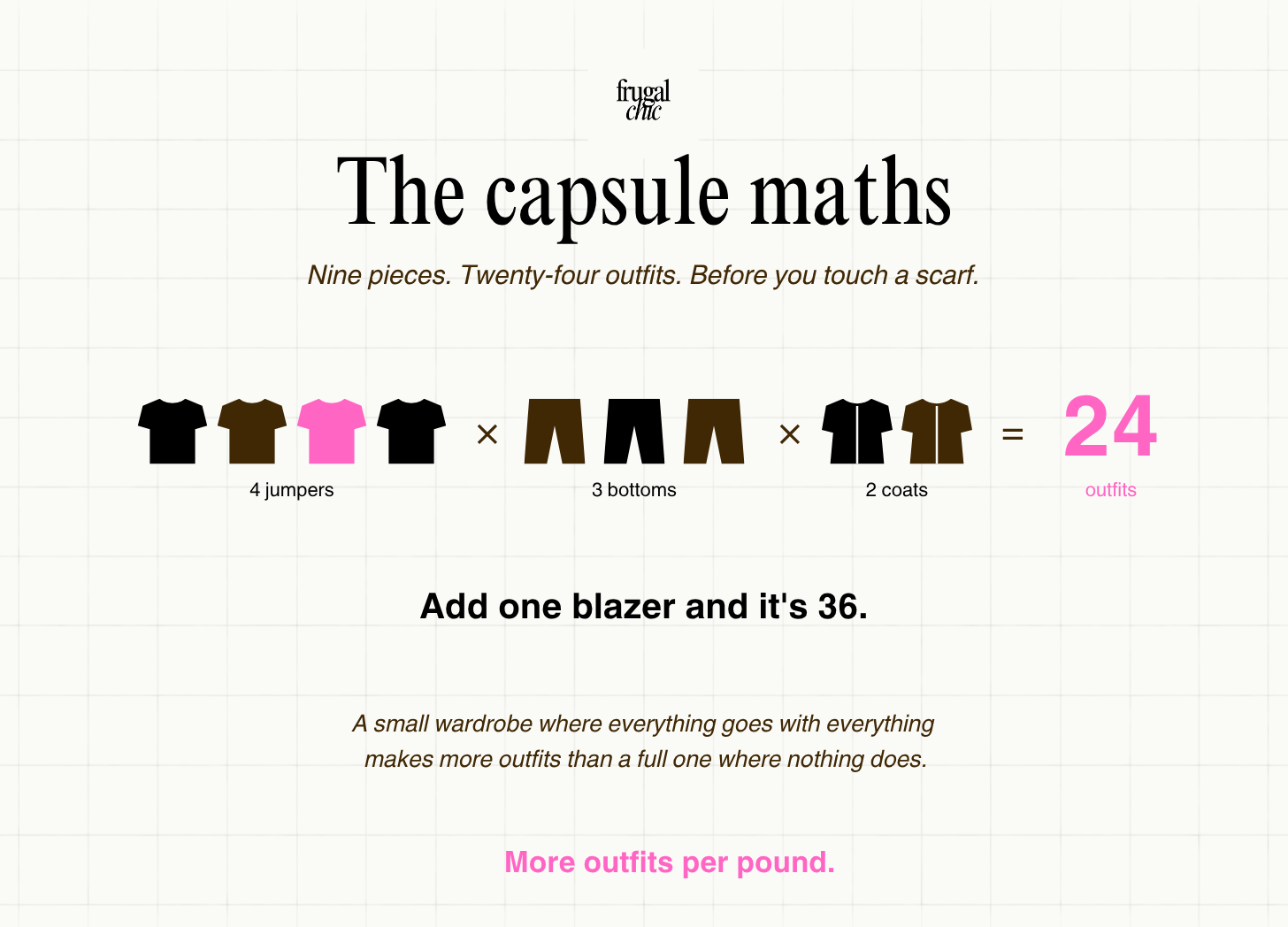
This is the bit nobody selling you a new wardrobe wants you to work out. Four jumpers, three bottoms and two coats is nine pieces. It’s also twenty-four outfits, before you touch a scarf or a belt. Add one blazer and it’s thirty-six.
A small wardrobe where everything goes with everything makes more outfits than a full one where nothing does. That’s what a capsule is. Not fewer clothes for the sake of it, but more outfits per pound.
This week, do one thing
Go through your camera roll from last October and count the jumpers you have. Write the number down. That’s your autumn wardrobe, and it’s probably smaller and better than you think.
Everything else is just the shops talking.
That’s all this week,
Mia xx
P.S. Wednesday's post is the one I've been thinking about writing for a little while. The full 2026 low-buy log: every item, every price, every wear count, plus the tracker I use so you can run your own numbers. It's for paid subscribers only, and if you've been meaning to upgrade, this is the week to do it.