


This is the 100th issue of Frugal Chic®! Whether you’ve been here since the first one or just found me, thank you. It felt right to mark it by writing about something that helped me get where I am today: building a personal brand.
Every so often, someone stops me on the street and asks, “Are you that Frugal Chic woman?” It still makes me chuckle, because two and a half years ago I was working in fashion and posting about money in my spare time.
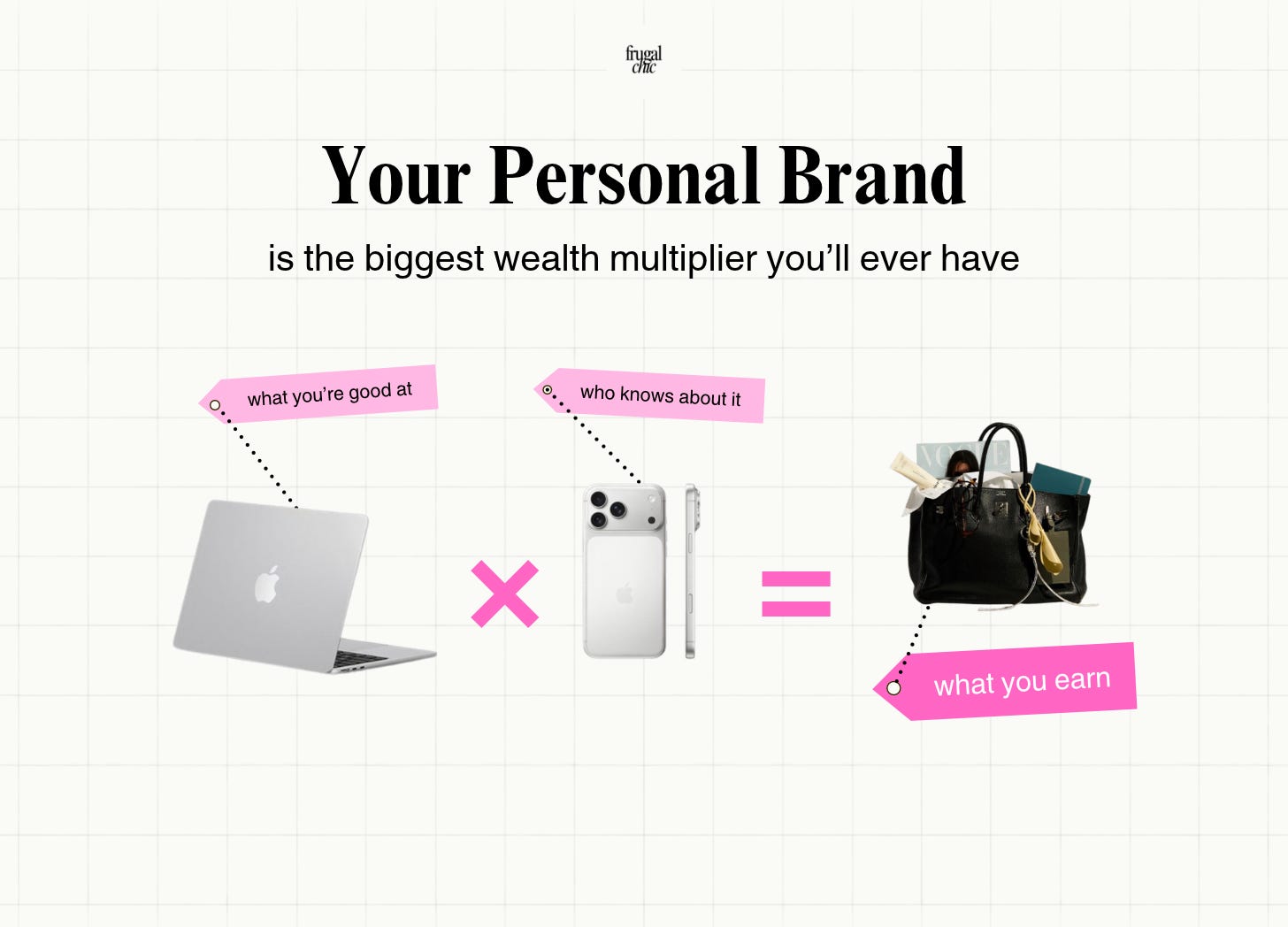
I built a six-figure net worth by 24 from a lot of unglamorous things: living at home, side hustles, negotiating my salary and saving hard. But the thing that made it grow exponentially was posting content. Saving got me started and being known for something is what multiplied it.
And no, this isn’t about becoming an influencer. Business owners and people in corporate jobs are building personal brands now too, and it’s getting them speaking gigs, clients and promotions.
In this issue:
Why a through line beats a niche
Thinking like a media company (even if you’re not a creator)
Why your circle matters more than your follower count
The 80/20 rule I still use
Why you should give your best ideas away
One thing to do this week
1. Pick a through line, not a niche
You’ll hear “you are the niche” a lot. My advice would be to scrap it. What helped me grow fastest was being known as the finance girl. People could put me in a box, which made it easy to know what they’d get from me.
That doesn’t mean only talking about one thing. I talk about fashion, beauty and lifestyle, but money runs through all of it. A jumper becomes cost per wear, dressing gown becomes the Diderot effect. The point of the story isn’t always what the story’s about.
If yours isn’t obvious, think about what friends and family already ask you for help with. Before I ever posted, mine wanted help setting up their investment accounts.
2. Think like a media company
The best advice I’ve had came from Jordan Schwarzenberger, who manages the Sidemen: think like a media company. Mia McGrath is my personal brand. Frugal Chic® is almost a separate one, with grid backgrounds, leather handbags and fonts people recognise before they’ve read a word.
You don’t have to be a creator to do this. Your personal brand is you and the value you offer. Content is just the vehicle, and a LinkedIn post counts. I went deeper on visuals and consistency here.

3. Your circle matters
People assume content is lonely. So much of my success has come from being in the right rooms. At my first brand event, I thanked a creator with 1.6 million followers for even inviting me. He treated me as an equal, made introductions and took a chance on me. I try to do the same for people now.
Go in generous rather than expecting. Share what you’re paid if someone asks, because when one of us undercharges, it brings the price down for everyone. Yes, proximity is easier in London, but one invite leads to the next wherever you are.
4. The 80/20 rule
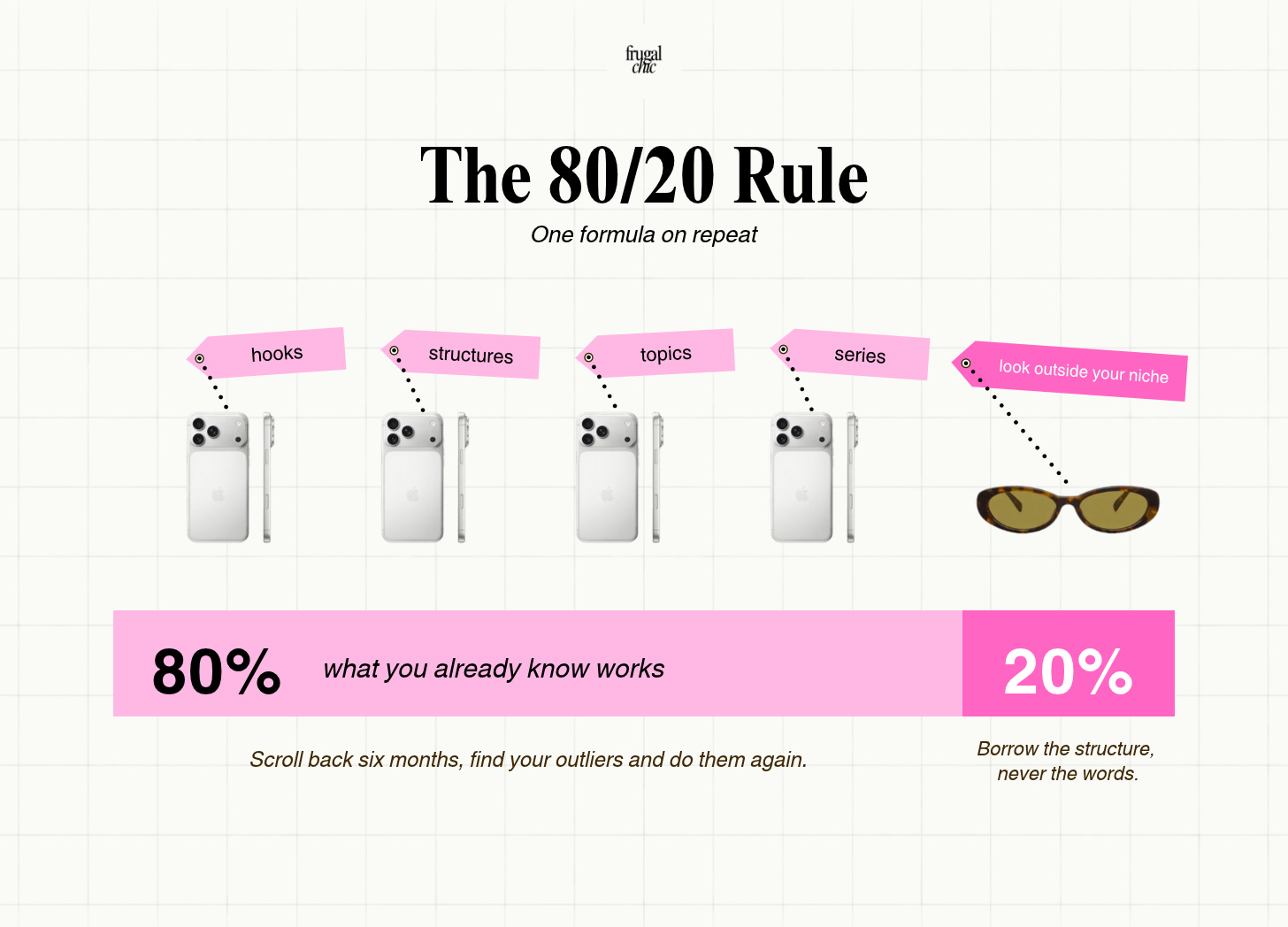
At the start, quantity leads to quality, because every post is data. I posted three times a day, which I’d have burnt out on if I’d kept it up. Now I do 80% of what I know works: the hooks, structures and topics that did better than average. Scroll back through the last six months, find your outliers and do them again.
The other 20% is experimenting. Look outside your niche (food, fashion, fitness) and borrow the structure, never the words. Copying someone word for word is like copying their homework and then failing the test.
5. Give before you get
People with 20 years of experience often ask me if they should really give their ideas away for free. Yes. You haven’t lost anything. You’ve swapped value for attention, and the better the idea, the more respect it earns. Share your frameworks first, then sell the more advanced version later.
The Frugal Chic® rule: Saving adds to your money. Being known for something is what multiplies it.
This week, do one thing
Pick one platform. It doesn’t have to be TikTok. If your industry runs on writing, LinkedIn or Substack might suit you better. Then decide how you’ll look on it: your fonts, a colour or two, the kind of images you’ll use. That’s your visual identity started.
The key takeaway here is: you don’t need to go viral. You need to be known for one thing, by the right people, again and again. That’s the multiplier.
That’s all this week,
That’s all this week,
Mia xx
P.S. On Wednesday, paid subscribers get The Personal Brand Audit: a worksheet to work out what people think of when they hear your name, and what you’d like them to think instead. I’d say this is a pretty good week to upgrade if you thought about levelling up and growing a personal brand in 2027.